
Last updated November 2, 2026
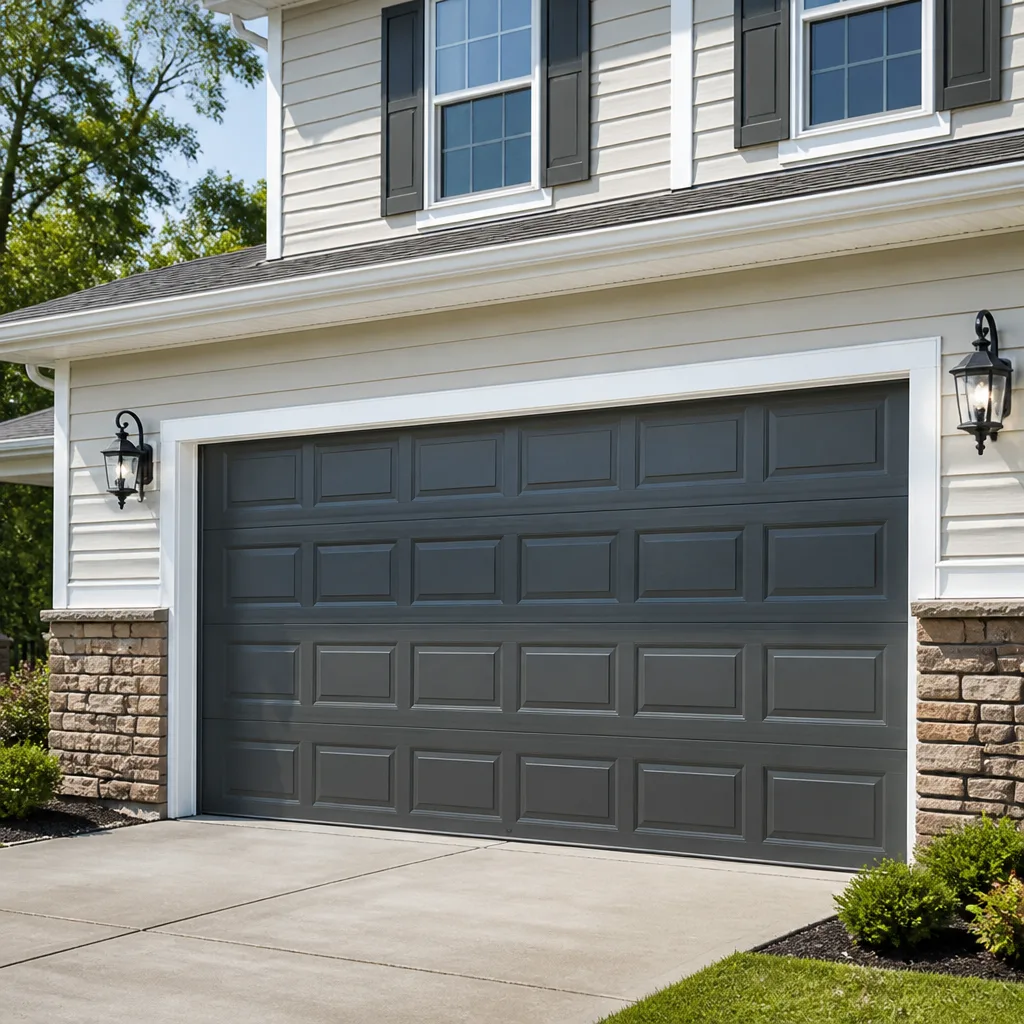 Raised-panel steel
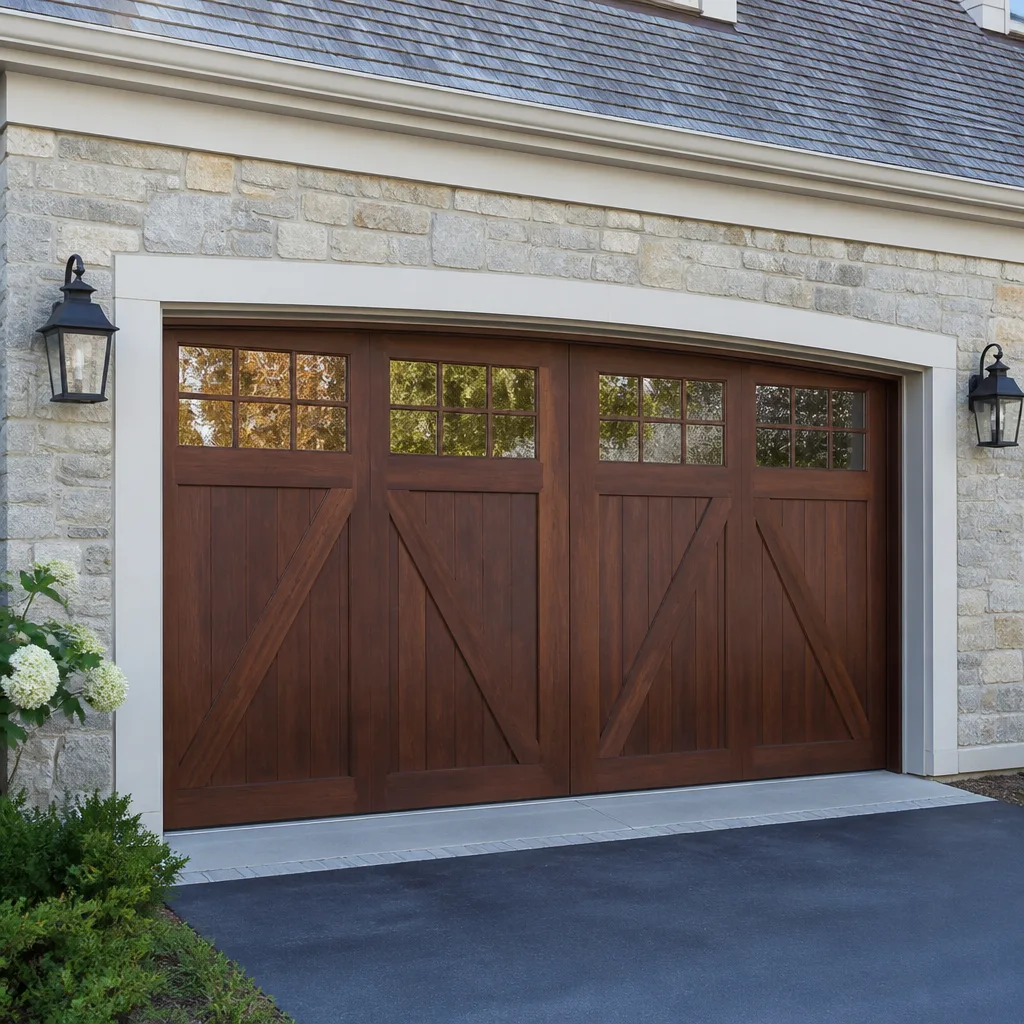 Carriage house
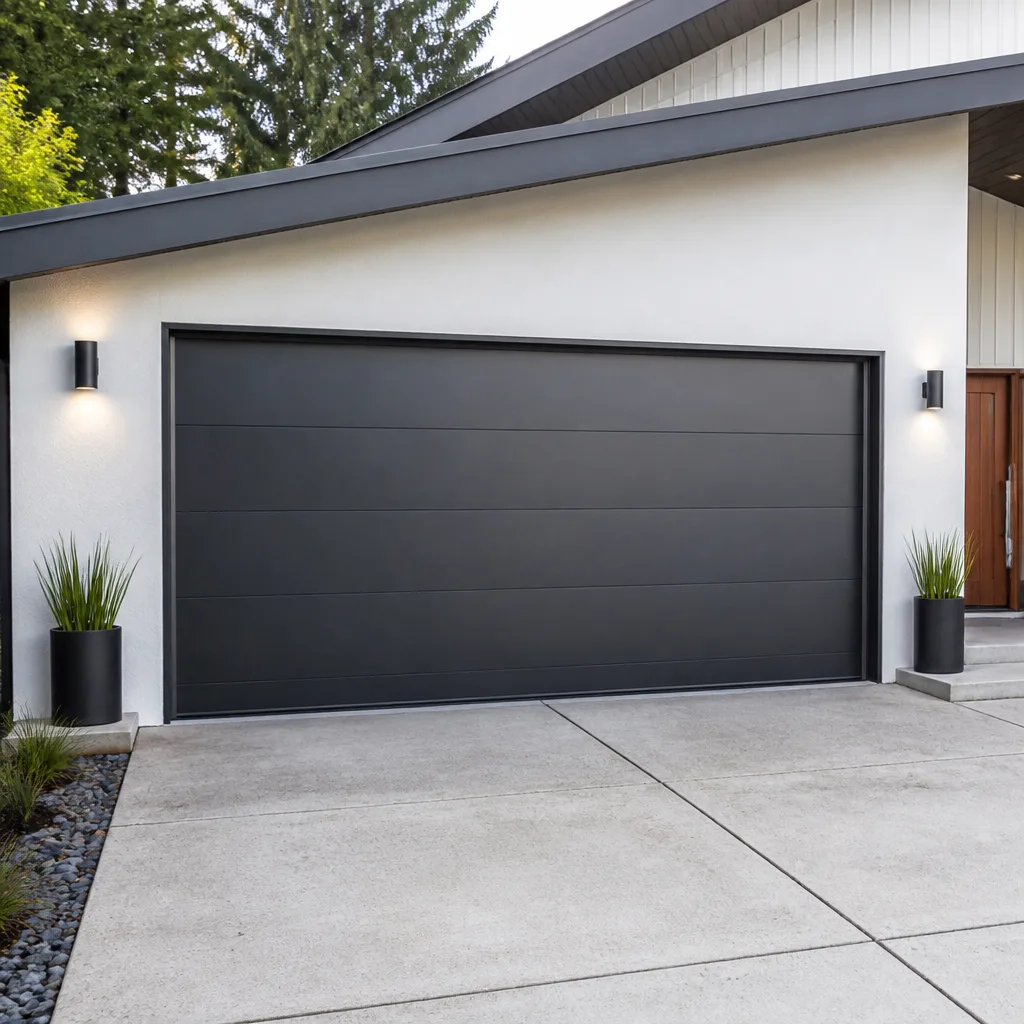 Modern flush
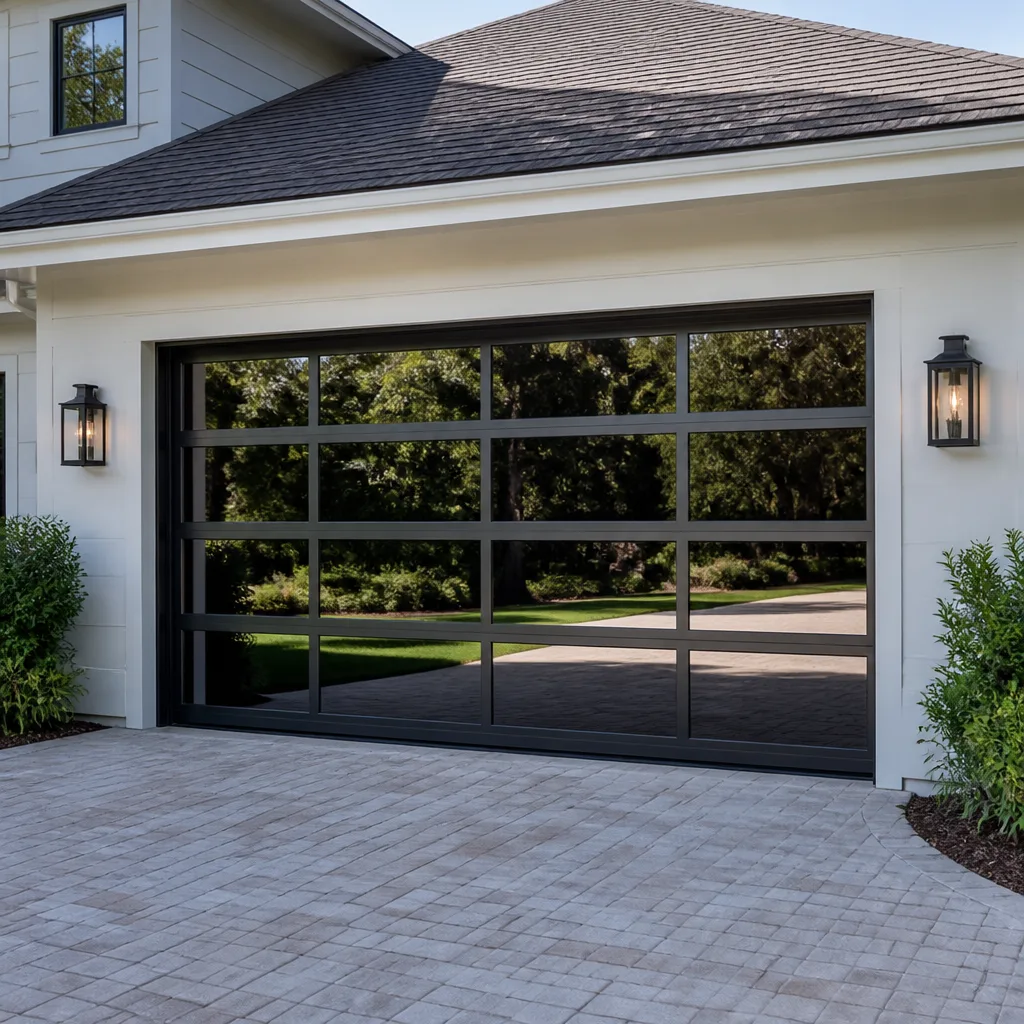 Full-view glass
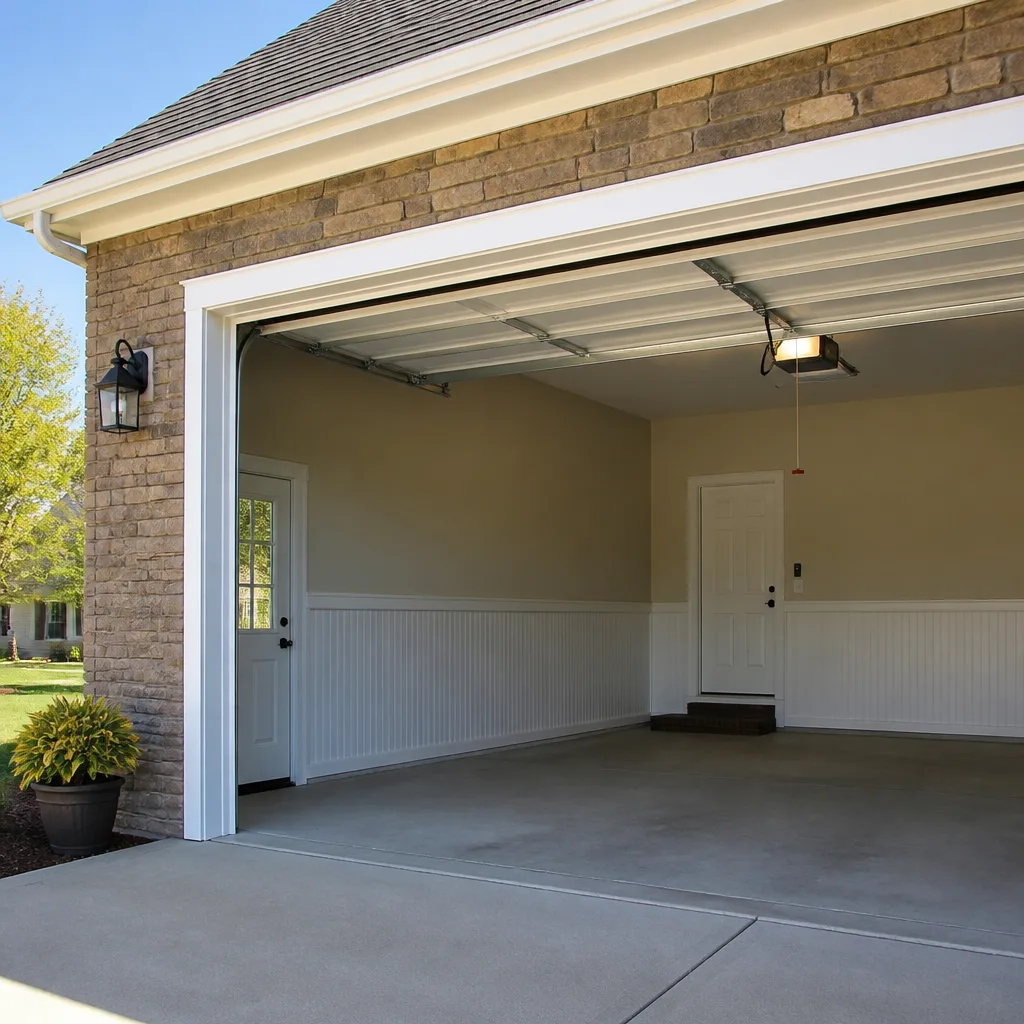 LiftMaster openers
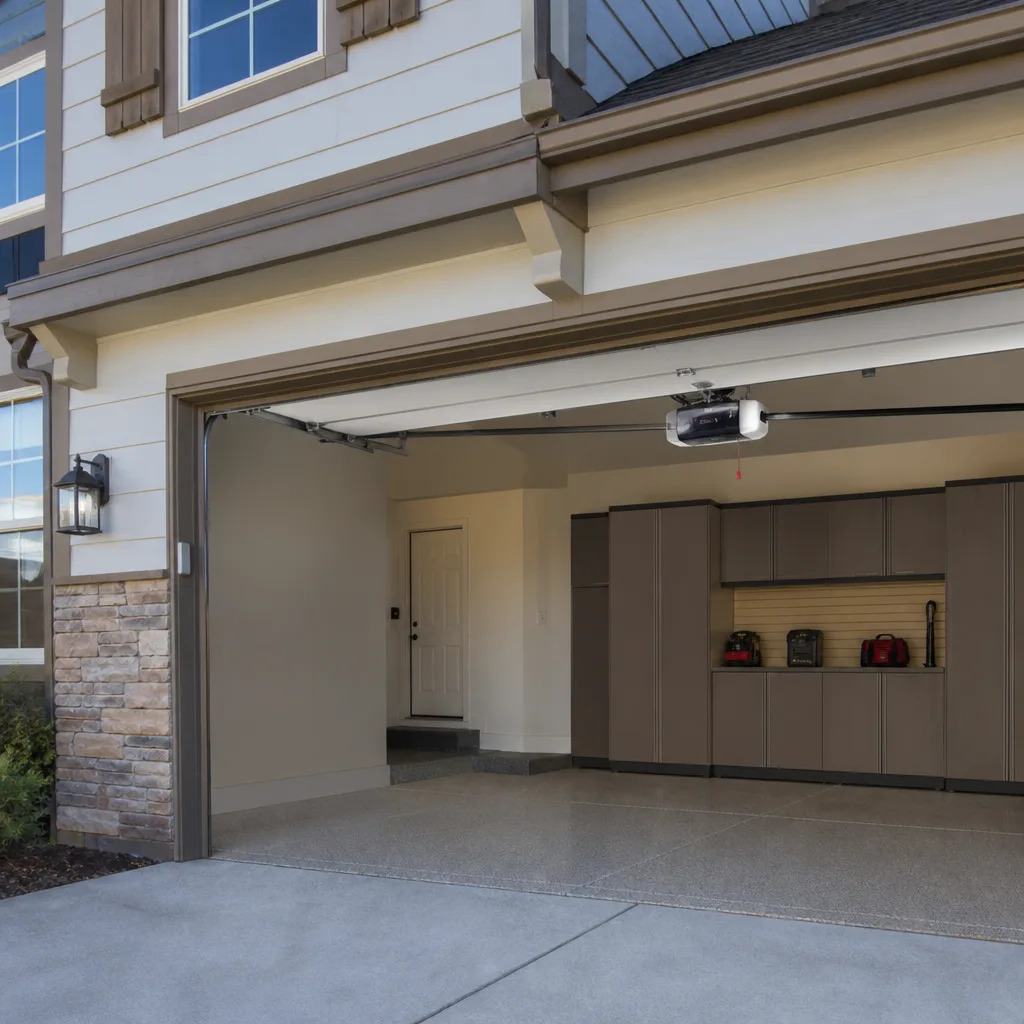 Chamberlain openers
Full 25-point door and opener safety check with every visit - springs, cables, rollers, tracks, and your LiftMaster or Chamberlain opener included
You get a price before we start. It does not change when the truck arrives.
Get your free estimateGarage Door Emergency Preparedness Guide for Jurupa Valley Homes
Most Jurupa Valley homeowners never think about their garage door until it refuses to move. Then they’re standing in a dark garage during a power outage, yanking on a release cord they can’t find, or staring at a door jammed shut after a 4.2 tremor rattled Mira Loma. Here’s the thing about garage door emergencies: they rarely announce themselves. But they follow patterns, and those patterns are predictable in Jurupa Valley. This guide walks through the five emergency scenarios most likely to hit your home, how to handle each one safely, and what preparation looks like before the lights go out or the ground shakes. For Garage Door Repair Troubleshooting: Common Problems and How to Fix Them, see our dedicated troubleshooting resource.
Quick Answer
Garage door emergency preparedness in Jurupa Valley means knowing how to manually operate your door during a power outage, how to inspect it after an earthquake, how to secure it before wildfire evacuation, and which backup power options work with your specific opener. The manual release cord is your primary tool, but using it incorrectly can cause cable slack, spring damage, or a door that slams shut.
Styles & brands we work with
- Raised-panel steel
- Carriage house
- Modern flush
- Full-view glass
- LiftMaster openers
- Chamberlain openers
Table of Contents
- Handling a Power Outage: The Manual Release Done Right
- Post-Earthquake Door Inspection: When to Operate and When to Wait
- Wildfire and Evacuation Prep: Securing the Door When You Leave
- Backup Power Options: Battery Units vs. UPS Systems
- Stuck Closed with a Car Inside: The Safe Sequence
- Jurupa Valley Seasonal Threats: Heat, Wind, and Monsoon Microbursts
- Preventive Maintenance That Reduces Emergency Risk
- Common Mistakes to Avoid
- When to Call a Professional
- Frequently Asked Questions
Handling a Power Outage: The Manual Release Done Right
Power outages in Jurupa Valley peak during July and August, when Riverside County’s grid strain coincides with triple-digit afternoons and the AC units in every home on your block running at full tilt. When the power drops, your garage door opener becomes a paperweight. The door itself still works fine mechanically, but only if you know how to disengage the opener.
The manual release cord hangs from a trolley on the opener rail. It’s usually red, and it dangles within arm’s reach above the center of the driveway-side door opening. Pulling it straight down disengages the opener carriage from the door. Now the door is free to move by hand.
But here’s where Jurupa Valley homeowners get into trouble: the direction matters. Before pulling the cord, ask one question: is the door currently open or closed?
If the door is closed:
- Verify the door is fully down and the opener is not mid-cycle.
- Pull the release cord straight down and let go. The door should stay put.
- Lift the door by hand using the handle or the bottom edge. Lift smoothly, not in jerks.
- Raise it fully until you hear the door settle into the horizontal track.
- To close it again by hand, pull down gently and evenly. Don’t let it drop.
If the door is open when power fails:
This is the trickier scenario. An open door with a broken spring, or a door you intend to close manually, carries real weight. A standard 16×7 steel door weighs 150 to 220 pounds. If the torsion spring has failed or the extension springs are weak, that weight lands entirely in your hands. When you pull the release cord on an open door, it can slam downward with enough force to crack a concrete slab or, worse, pin someone underneath.
Our approach from years of garage door repair in Jurupa Valley: if the door is open and you need to close it manually, have two people ready. One person pulls the release cord while the other supports the door by its bottom edge. Lower it slowly and in control. If you cannot hold the door’s weight, leave it open, brace it with a 2×4 on each side, and call for service.
One more Jurupa Valley specific detail: many homes in the area have side-mounted openers, particularly on newer builds in the Riverbend and Indian Hills neighborhoods. Side-mounted units use a different release mechanism located on the wall unit itself, usually a pull or a lever near the motor. If you don’t see a red cord, check the wall button. The technique is the same: disengage, then move the door by hand with control.
Whatever brand is on your door, we know it. Chamberlain, Genie, and LiftMaster openers all have slightly different release mechanisms, but the physics of the door underneath are identical.
Post-Earthquake Door Inspection: When to Operate and When to Wait
Jurupa Valley sits within the Southern California seismic zone, roughly 12 miles from the San Jacinto fault and within shaking distance of the San Andreas. The 2019 Ridgecrest sequence, the 2008 Chino Hills event, and smaller local tremors all sent vibrations through Jurupa Valley homes. After any quake you can feel, your garage door deserves a careful once-over before you push the opener button.
Garage doors are rigid panels riding on metal tracks anchored to wood framing. When the ground shakes, the structure moves. The door and track may not move together. That mismatch shows up as displaced rollers, bowed track sections, loose mounting brackets, or a door that sits visibly crooked in the opening.
Here’s the sequence we recommend, and it’s the same one our technicians follow on service calls across Jurupa Valley:
- Visual sweep from outside. Stand in the driveway and look at the door. Is it level? Are the vertical tracks parallel to the door edge on both sides? Any gap between the door and the opening at top, bottom, or sides that wasn’t there before?
- Check the rollers. Look at each roller where the door panels meet the track. A roller that has jumped the track will be obvious. A roller with a bent stem may look fine from a distance but binds when the door moves.
- Inspect the mounting brackets. The brackets holding the track to the wall and ceiling should be flush against the framing. After a quake, you may see pulled screws, cracked drywall around anchors, or brackets that shifted a quarter inch.
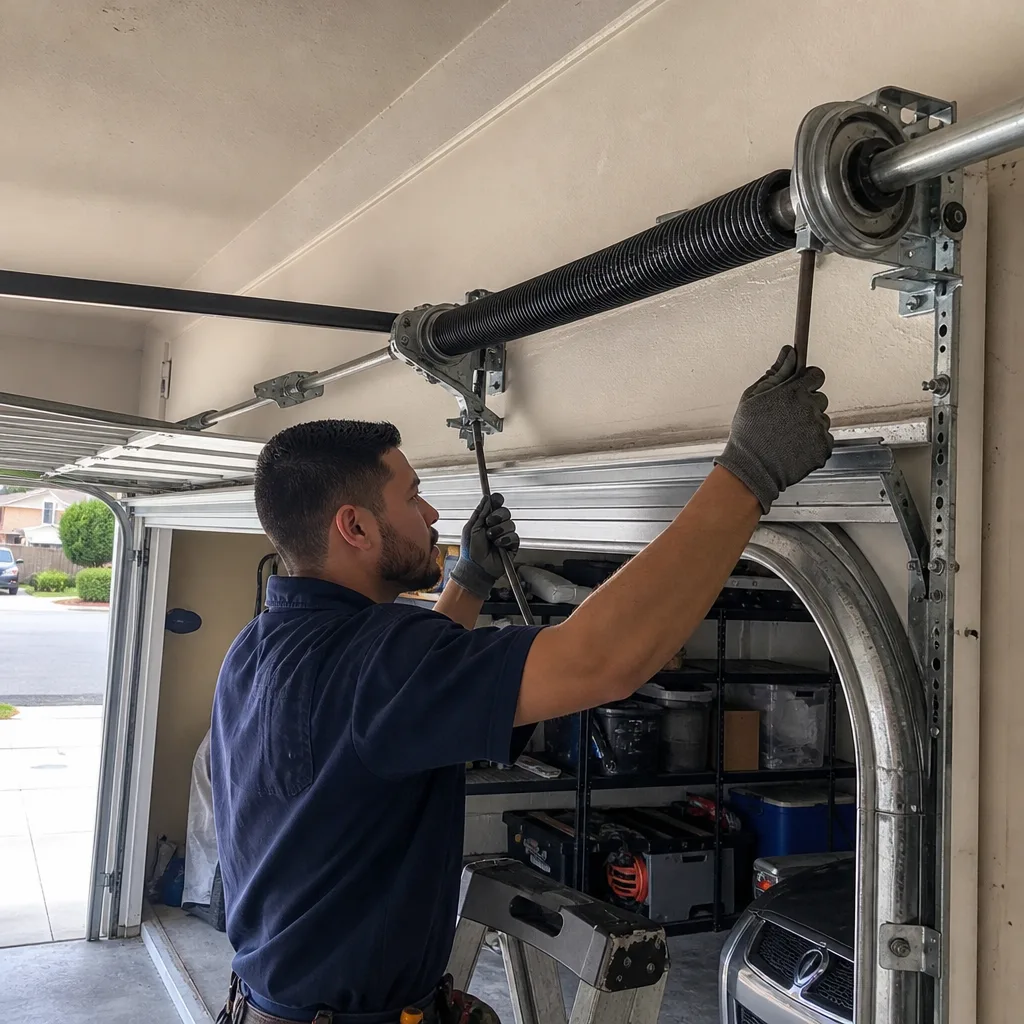
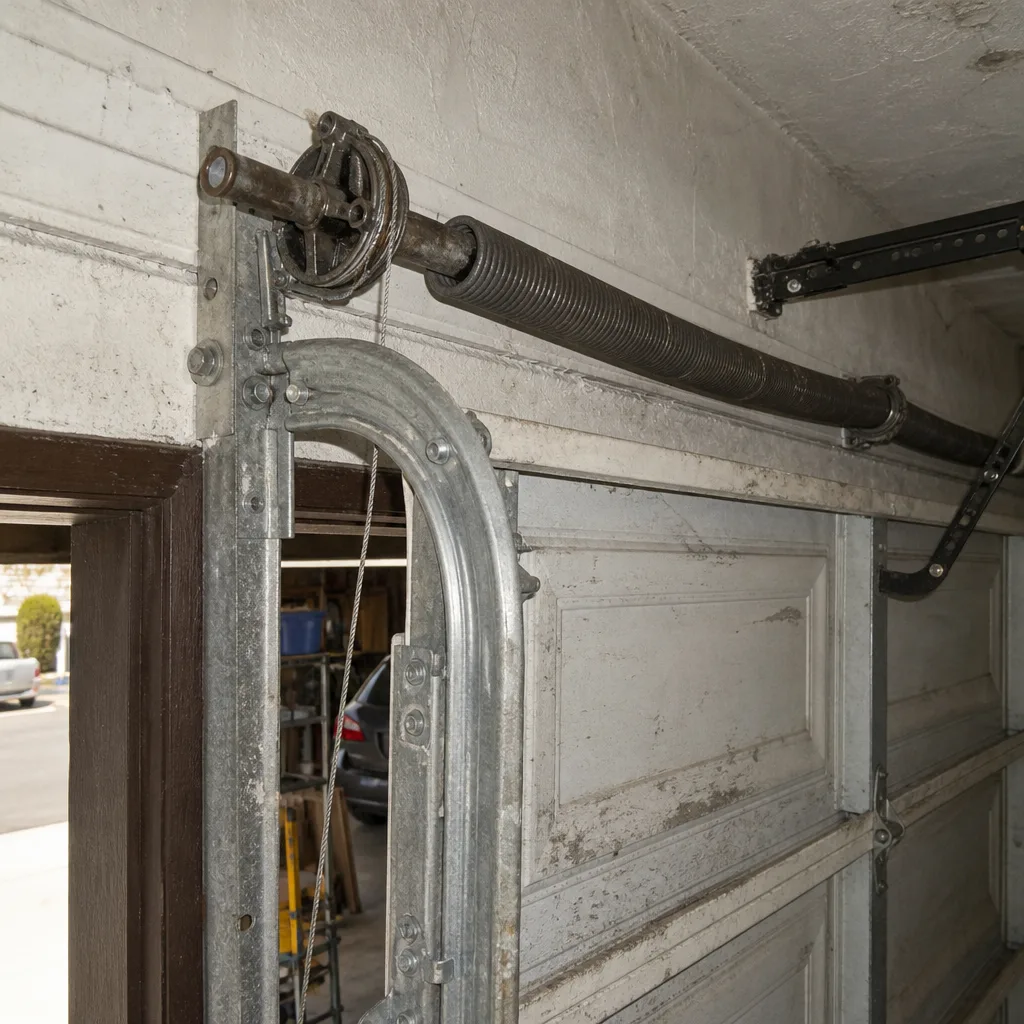
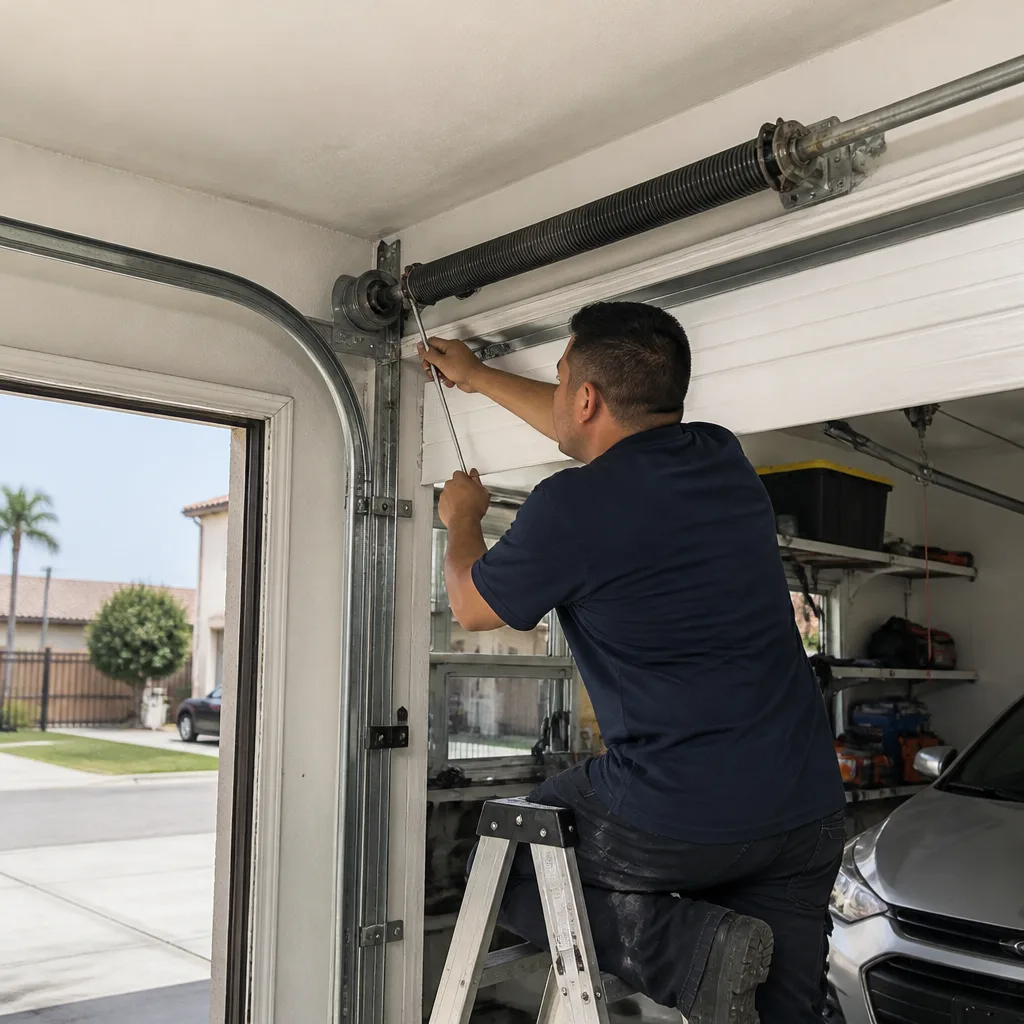
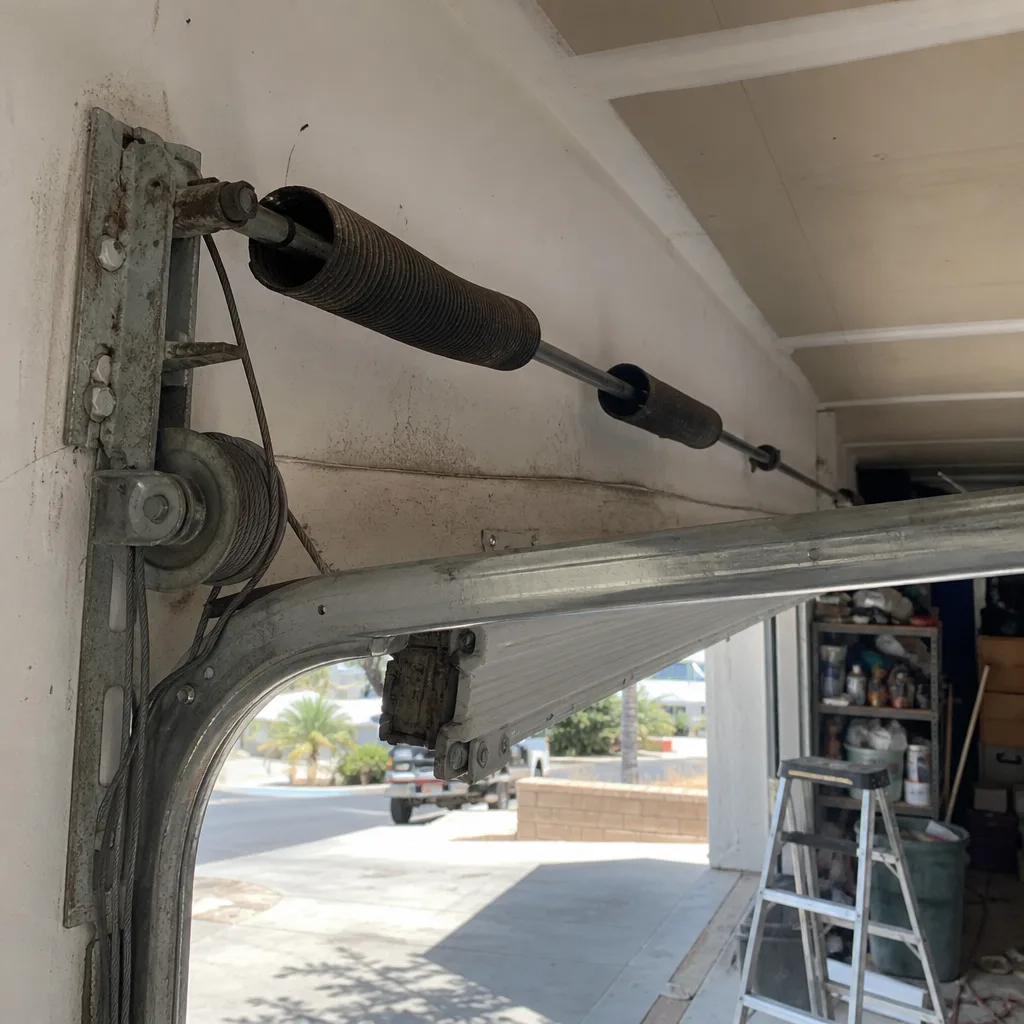
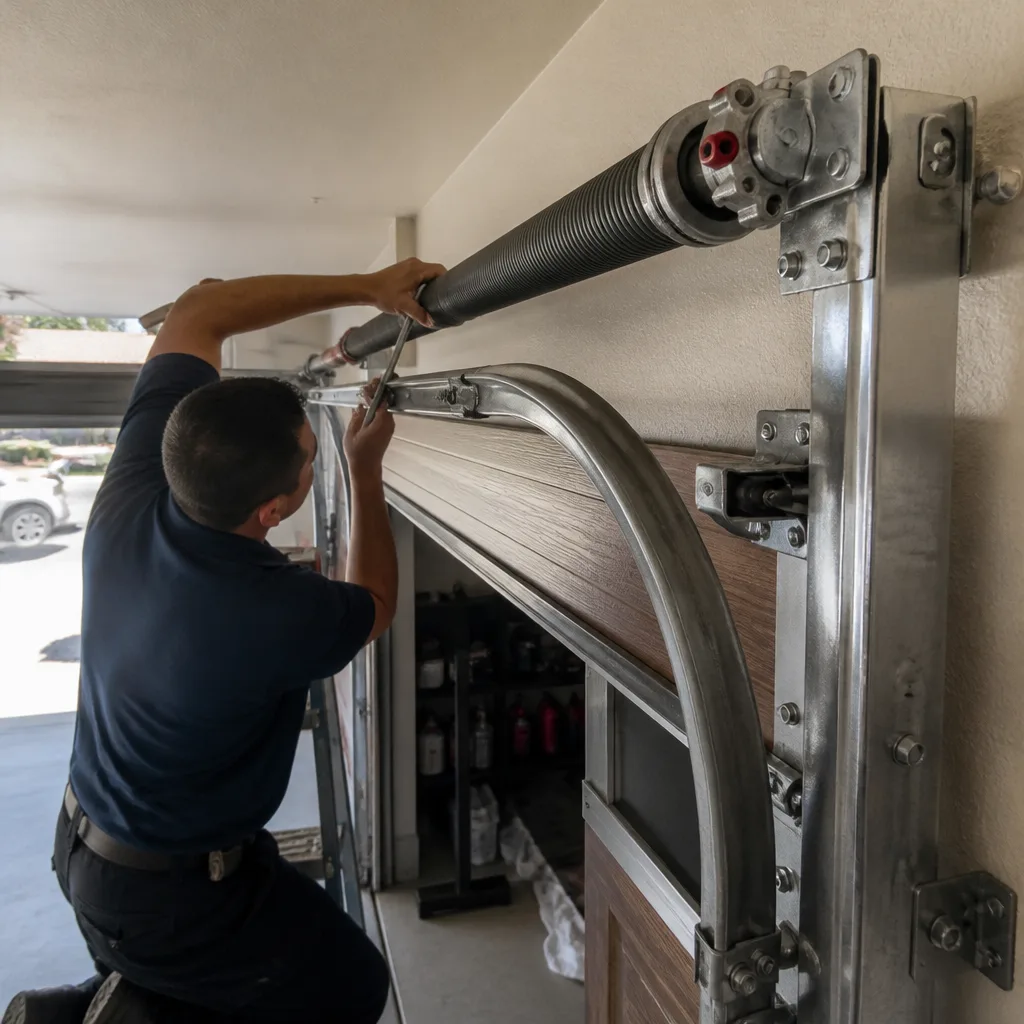
- Check the spring assembly. For torsion springs above the door, look for gaps in the coil, a visible separation, or a broken spring hanging loose. For extension springs along the side tracks, check both springs are intact and connected to their safety cables.
- Test with caution. If everything looks right, operate the door once by hand. Lift it about three feet and watch the tracks. Any binding, scraping, or popping sound means stop. If the door operates smoothly by hand, reconnect the opener and test a full cycle.
If the door binds, squeals, or won’t move evenly, do not force it. A door that jams midway with a car inside or outside is a bigger problem than the quake itself. Briarwood’s garage door opener repair in Jurupa Valley covers realignment and damage assessment when a quake has shifted the system out of square.
One note on older Jurupa Valley homes. Houses built before the mid-1990s often have thinner track gauge and less robust mounting. These systems are more likely to shift during seismic activity. If your home in the Belltown or Pedley area falls into that category, a post-quake inspection is especially worth doing.
Wildfire and Evacuation Prep: Securing the Door When You Leave
Jurupa Valley sits against the Santa Ana River corridor and the northern edge of the Jurupa Hills. Fire weather in October and November brings red flag warnings, Santa Ana winds, and evacuation orders that can arrive with a few hours’ notice or less. When you’re loading the car and leaving quickly, the garage door is often the last thing on your mind, but it can be the difference between a home that’s secured and one that’s exposed.
Evacuation prep for your garage door comes down to three things: knowing it will open, knowing it will close, and knowing it will stay closed if you’re gone for days.
Before you leave:
- Cycle the door once. Open it fully, close it fully. Watch and listen. If it hesitates, reverses, or sounds rough, you now know it may not work when you return. Better to discover this before evacuation than after.
- Close the door completely. A garage door that’s open during a wildfire event invites embers into the garage, where fuel, paint, cardboard, and stored household items await. The garage is one of the most vulnerable entry points for ember intrusion in any Southern California home.
- Disconnect the opener if power is likely to go out and you’ll need manual access later. If you anticipate returning to a powerless house, disengage the opener before you leave. That way the door can be lifted by hand when you get back. Mark the release cord with a piece of tape or a small flag so you can find it in the dark.
- Lock the door if it has a manual slide lock. Not all Jurupa Valley garage doors have slide locks, but if yours does, engage it when you leave for an extended evacuation. This prevents the door from being lifted from outside.
- Take the opener remote inside or with you. Opener remotes left in cars parked in the driveway are a known entry point for thieves during post-fire returns. Take the remote inside the house or with you in your evacuation vehicle.
When you return after an evacuation, check the door before assuming it will work. Wind-driven debris can dent panels, buck framing, or knock track alignment out of place. If the door resists, don’t force it. For homeowners preparing a more permanent fire-hardening plan, Briarwood’s garage door installation in Jurupa Valley includes options for doors with better sealing and ember resistance.
Backup Power Options: Battery Units vs. UPS Systems
When the power drops in Jurupa Valley, your garage door opener is only as useful as its power source. Two backup options exist, and they’re not interchangeable.
Battery Backup Units
These are purpose-built for garage door openers and connect directly to the opener motor. When AC power fails, the battery kicks in automatically and powers the opener for a limited number of cycles, typically 20 to 50 depending on the unit and how recently it was charged. Battery backup is available on many current Chamberlain and Genie opener models, and LiftMaster offers it on several of its residential lines. Some openers ship with battery backup integrated. Others accept an add-on battery module.
The advantage: hands-free operation. The door opens and closes exactly as it does on AC power, remote controls still work, and there’s no manual lifting involved. The limitation: battery capacity. Once the battery drains, you’re back to the manual release.
UPS Systems
An uninterruptible power supply is the same device you might use for a computer. A UPS plugs into a wall outlet, the opener plugs into the UPS, and during a power outage the UPS supplies AC power from its internal battery. The catch: garage door openers have a high inrush current when starting their motor. Most consumer UPS units cannot sustain that draw for more than a cycle or two, and some trip immediately. A UPS rated for 1500VA or higher with pure sine wave output is the minimum we’d suggest for any opener, and even then expect limited cycles.
For Jurupa Valley homes where summer outages are weekly rather than yearly, a dedicated battery backup matched to your opener brand is the more reliable choice. For homes that only need occasional peace of mind during fire season, a UPS sized correctly can work, but a battery backup is still the cleaner solution.
We diagnose and service Clopay, Amarr, Chamberlain, and Genie systems across Jurupa Valley, and the conversation about backup power almost always starts with what’s already installed. Brand-neutral advice means we tell you whether your current opener can accept a battery backup, or whether you’d be better served by a different setup. Repair first, replacement only when it’s the right call.
Stuck Closed with a Car Inside: The Safe Sequence
It’s the scenario that generates the most panicked phone calls: the door is stuck in the closed position, the car is inside, and you need to leave. In Jurupa Valley, we hear this most often during summer brownouts and after overnight quakes. Here’s the sequence to follow, in order, before you call anyone.
- Confirm the opener is truly not working. Press the wall button. Press the remote. Listen. If you hear the motor hum but the door doesn’t move, the opener is trying but something mechanical has failed, usually the spring or carriage.
- Check for visible damage. Look at the springs. A broken torsion spring has a visible gap in the coil. A snapped extension spring hangs loose. If either spring is broken, do not attempt to lift the door by hand. The door weight is no longer counterbalanced, and you’re fighting 150 to 220 pounds with no mechanical advantage.
- Try the manual release only if the door is intact and springs appear whole. Pull the release cord straight down. If the door lifts smoothly with moderate effort, raise it and lock or block it open. If it feels heavy, resists, or drops, lower it immediately and stop.
- Never crawl under a partially raised door. This should go without saying, but in an emergency people do unwise things. The door is under spring tension. A failure mid-lift sends it down fast.
- Call for service. If you can’t safely open the door by hand, call Briarwood Garage Door Repair at (866) 569-5176. We carry springs, cables, and rollers on our trucks across Jurupa Valley so the fix is usually same-visit.
The price is quoted and agreed before any work starts. That’s our standard on every call, so there’s no surprise invoice after the door is back in operation.
Jurupa Valley Seasonal Threats: Heat, Wind, and Monsoon Microbursts
Jurupa Valley’s emergency profile changes with the calendar. Knowing what month it is tells you what your garage door is likely to face.
Summer (June through September): Sustained heat above 100°F, occasional brownouts, and monsoon moisture from the southeast that can produce sudden, violent microbursts along the Santa Ana River corridor. These microbursts are the hidden threat. A 50 mph downdraft hitting your garage door face-on delivers a wall of pressure the door was not designed to absorb. We’ve replaced panels in the Mission Ranch and Sunnyslope neighborhoods that looked like someone drove into them, when the culprit was actually wind.
Fire season (September through November): Santa Ana winds, red flag warnings, and evacuation risk. The garage door’s job during this window is to seal tightly and stay closed. Gaps around the door edges let embers into the garage, and a door that fails to close fully during evacuation compromises the entire structure.
Winter (December through February): Cooler and wetter, but not freezing. The risk here is rust and track corrosion from higher humidity and occasional heavy rain, especially on older doors in homes near the river bottom. Rusted rollers bind, and corroded tracks chew up nylon wheels. Winter is the season for preventive maintenance, not emergency calls.
Spring (March through May): Calm, dry, and the best window for any scheduled work. Spring is when we recommend considering garage door installation in Jurupa Valley if your current door is aging, because you’ll have it done before summer heat and fire season arrive.
Preventive Maintenance That Reduces Emergency Risk
The best emergency is the one that never happens. Most emergency calls we handle in Jurupa Valley trace back to neglected maintenance, not sudden failure. A few minutes a season keeps your door out of emergency territory.
Monthly:
- Operate the door once and listen. Squeaks, pops, grinding, or hesitation are early warnings.
- Visually check springs, cables, and rollers for rust, fraying, or uneven wear.
- Test the auto-reverse safety feature by placing a 2×4 flat on the ground under the door and closing it. The door should reverse on contact.
Quarterly:
- Lubricate rollers, hinges, and springs with a silicone-based garage door lubricant. Do not use WD-40; it’s a solvent, not a lubricant.
- Check all bolts and brackets. Tighten anything loose.
- Inspect the weather seal along the bottom of the door. In Jurupa Valley’s heat, rubber seals dry and crack within a few seasons.
Annually:
- Have a professional inspect the full system, including spring tension and opener force settings. We offer this as part of every service call across Jurupa Valley.
- Test the manual release. Pull the cord, lift the door by hand, close it again. If you’ve never done this, now is the time.
- Replace remote and keypad batteries. Dead batteries are the most preventable “emergency” we get called for.
Garage doors are all we do, so we do them right. A homeowner who does these checks once a season will catch most problems before they become 9 p.m. emergencies.
Common Mistakes to Avoid
- Pulling the release cord while the opener is mid-cycle. If the opener is actively moving the door when you disengage it, the door can lurch in either direction. Always wait for the door to stop before pulling the release.
- Assuming the manual release works the same on every opener. Chamberlain and Genie release mechanisms look similar, but the trolley engagement differs slightly. If pulling feels wrong, stop and check rather than forcing it.
- Leaving the release cord tangled or tied up. In Jurupa Valley garages that double as storage, bikes and boxes often block the release cord or people zip-tie it up out of the way. In an emergency, you need that cord accessible in the dark. Keep it clear.
- Running the door after feeling an earthquake without inspecting first. A shifted track may work for one cycle, then throw a roller on the next. The damage compounds.
- Replacing a broken spring with a heavier-duty spring from a different brand. Spring tension must match the door’s weight and the opener’s force settings. Mixing brands or upsizing springs creates more problems than it solves. Repair first, replacement only when it’s right.
- Waiting until red flag warnings to test the door. By then, if the door fails, you’re in a time crunch. Test cyclically during the off-season.
- Leaving the remote in a car parked outside during evacuation. A remote control is a key to your garage. Take it with you or inside the home.
When to Call a Professional
Some situations are safe to handle yourself: pulling the release cord, lifting a healthy door by hand, checking rollers and bearings, replacing remote batteries. Others are not. Call a professional if the spring is broken or shows separation, if the door feels too heavy to lift by hand, if cables are frayed or have come off the drum, if the door is off track, or if the opener motor runs but the door won’t move. These conditions involve stored spring tension or significant door weight, and a mistake can cause serious injury.
Briarwood Garage Door Repair offers free estimates in Jurupa Valley. Call (866) 569-5176 for any garage door emergency, or to schedule a preventive inspection before the next outage, quake, or fire season has you scrambling.
Frequently Asked Questions
Pull the red release cord hanging from the opener rail straight down to disengage the opener, then lift the door by hand. If the door is open when power fails, have a second person support the door’s weight before pulling the release, because the door can slam down. Call (866) 569-5176 if the door won’t move manually.
Yes. Seismic movement can shift track alignment, bend roller stems, or loosen mounting brackets without leaving obvious exterior damage. After any quake you can feel in Jurupa Valley, do a visual sweep and a manual test before operating the door with the opener.
Several current Chamberlain and Genie models offer battery backup, either integrated or as an add-on module. LiftMaster also offers backup on select residential lines. Check your specific model’s specifications, or have us assess it during a service call in Jurupa Valley.
Cycle the door once to confirm it works, close it fully, engage any manual slide lock, disengage the opener if you anticipate returning to a power outage, and take remotes inside or with you. The goal is a sealed garage that resists ember entry and a door you can still open manually when you return.
That usually means the spring has broken or the carriage has disconnected from the door. The opener motor runs, but there’s no mechanical connection to lift the door. Don’t try to lift it by hand in this condition. Call (866) 569-5176 for service in Jurupa Valley.
Twice a year. Pull the release cord, lift and lower the door by hand, then reconnect. If the door feels heavy or won’t move smoothly, have the springs and balance checked before you rely on manual operation in an emergency.
The Bottom Line
Garage door emergencies in Jurupa Valley follow a pattern: heat-driven power outages in summer, seismic surprises year-round, and wildfire-driven evacuations in fall. Preparation reduces the risk in every case. Know where your manual release cord is and how it works. Inspect your door after any quake you feel. Secure it properly when you evacuate. Consider a battery backup matched to your opener brand. And if the door feels wrong, stop and call before you force it. From spring snaps to smart openers, one call covers it at (866) 569-5176.
Written by the team at Briarwood Garage Door Repair, serving Jurupa Valley since 2018. Explore more guides & resources on our blog.
See the difference
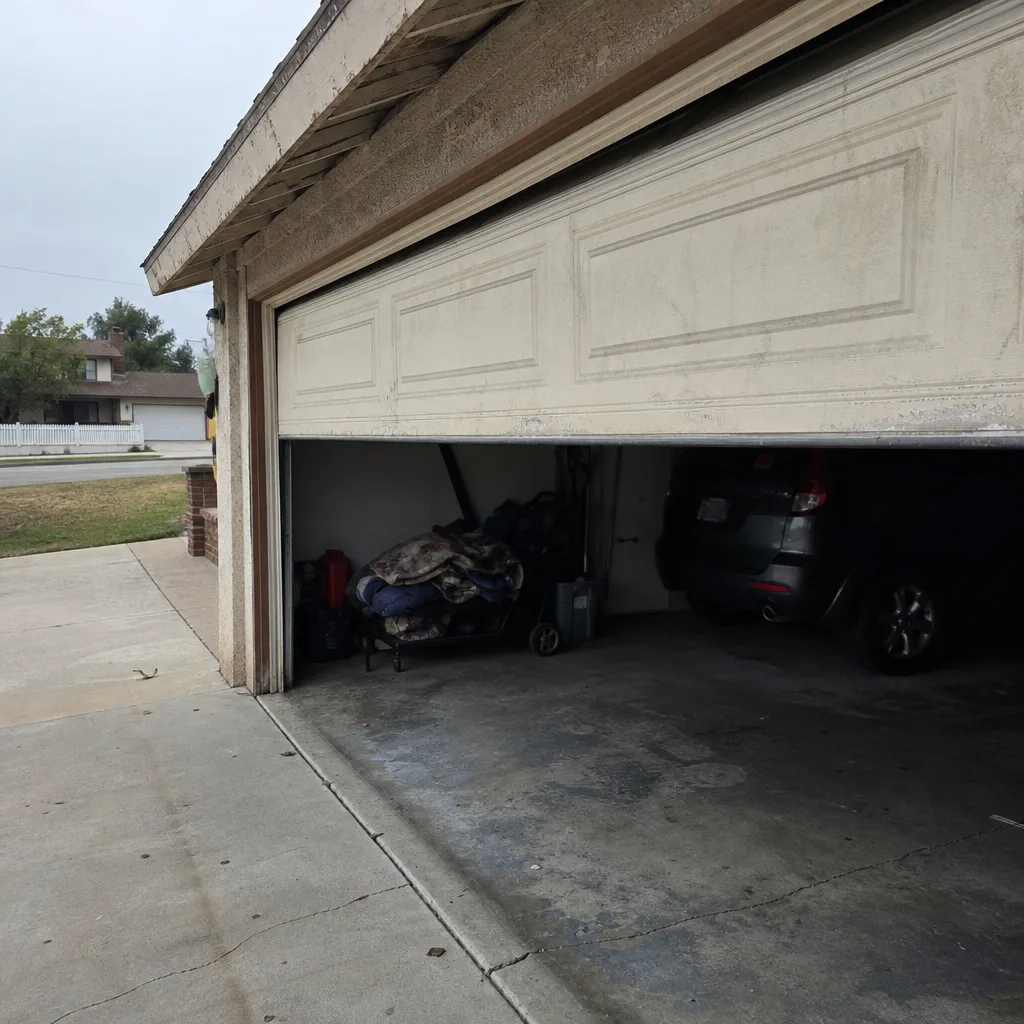 Before
 After
 Before
 After
 Before
 After