
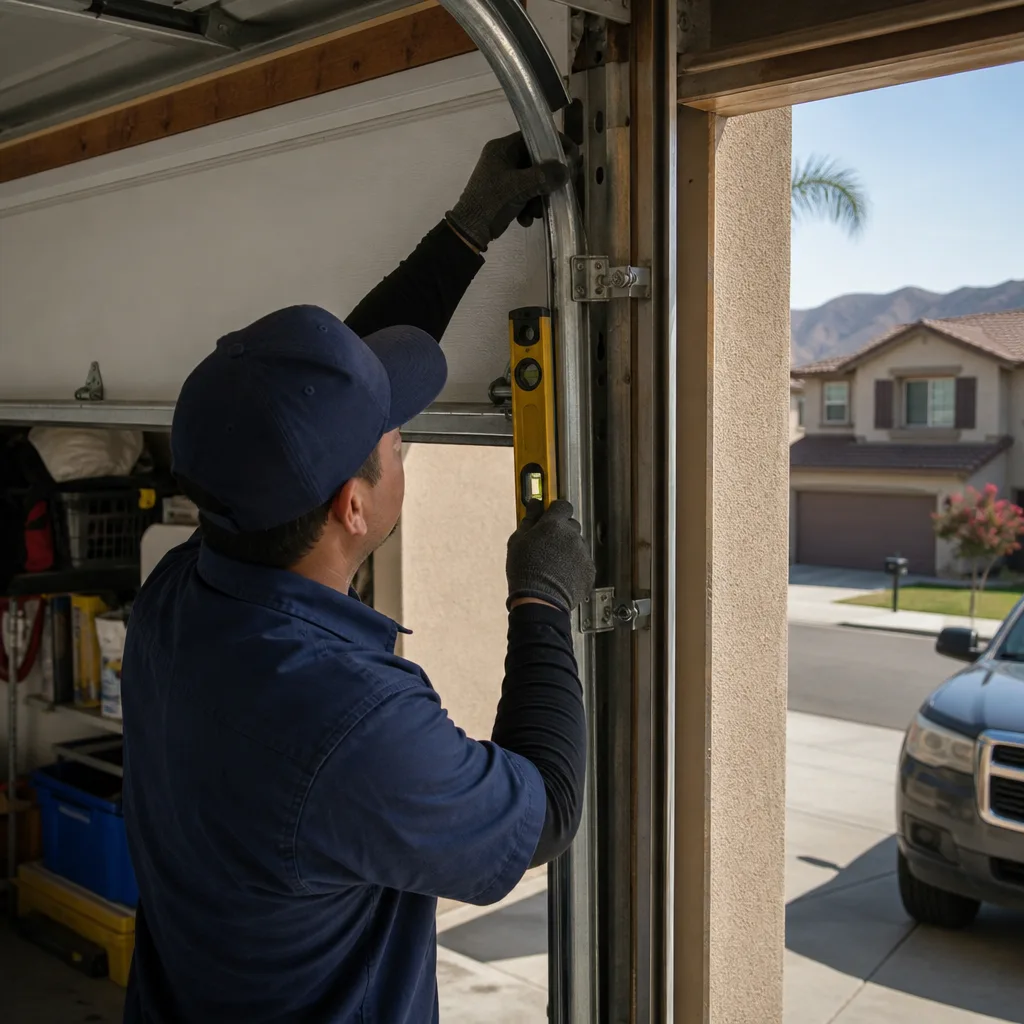
Last updated November 2, 2026
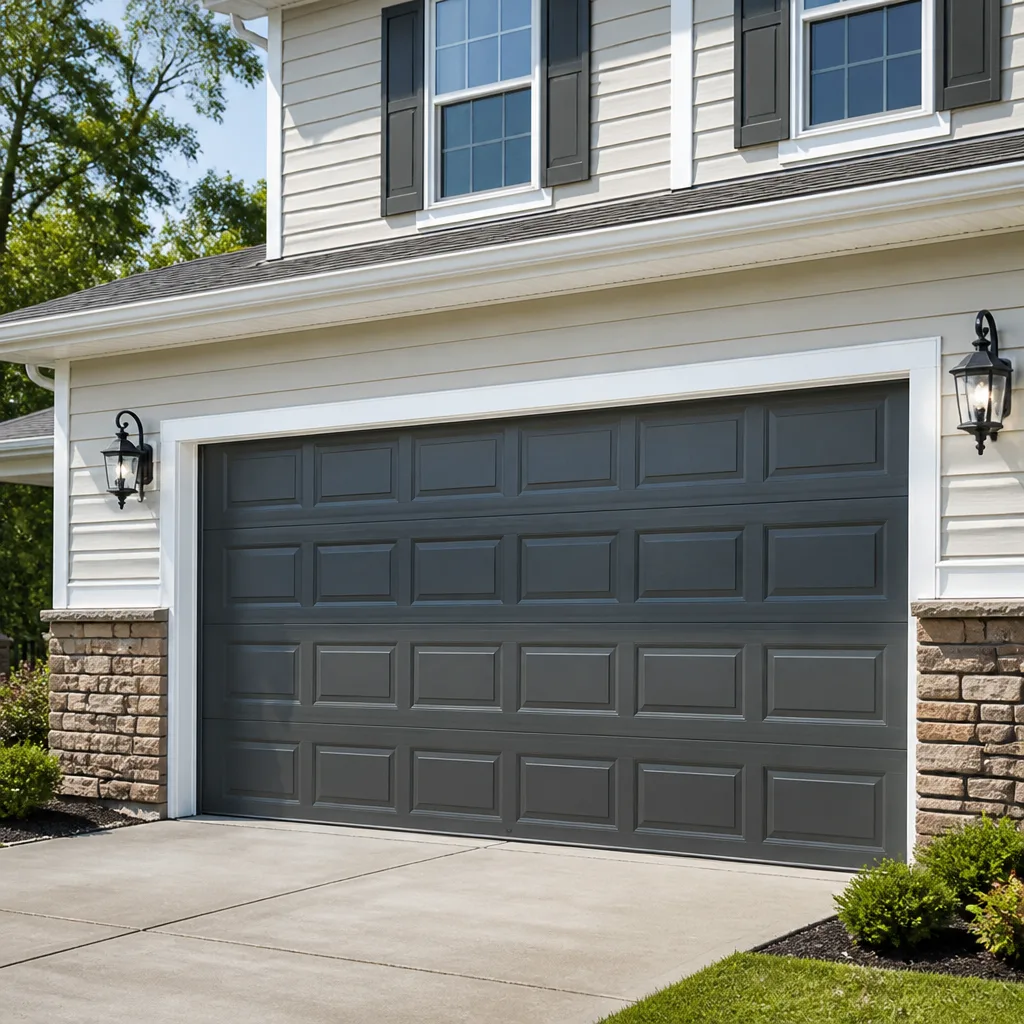 Raised-panel steel
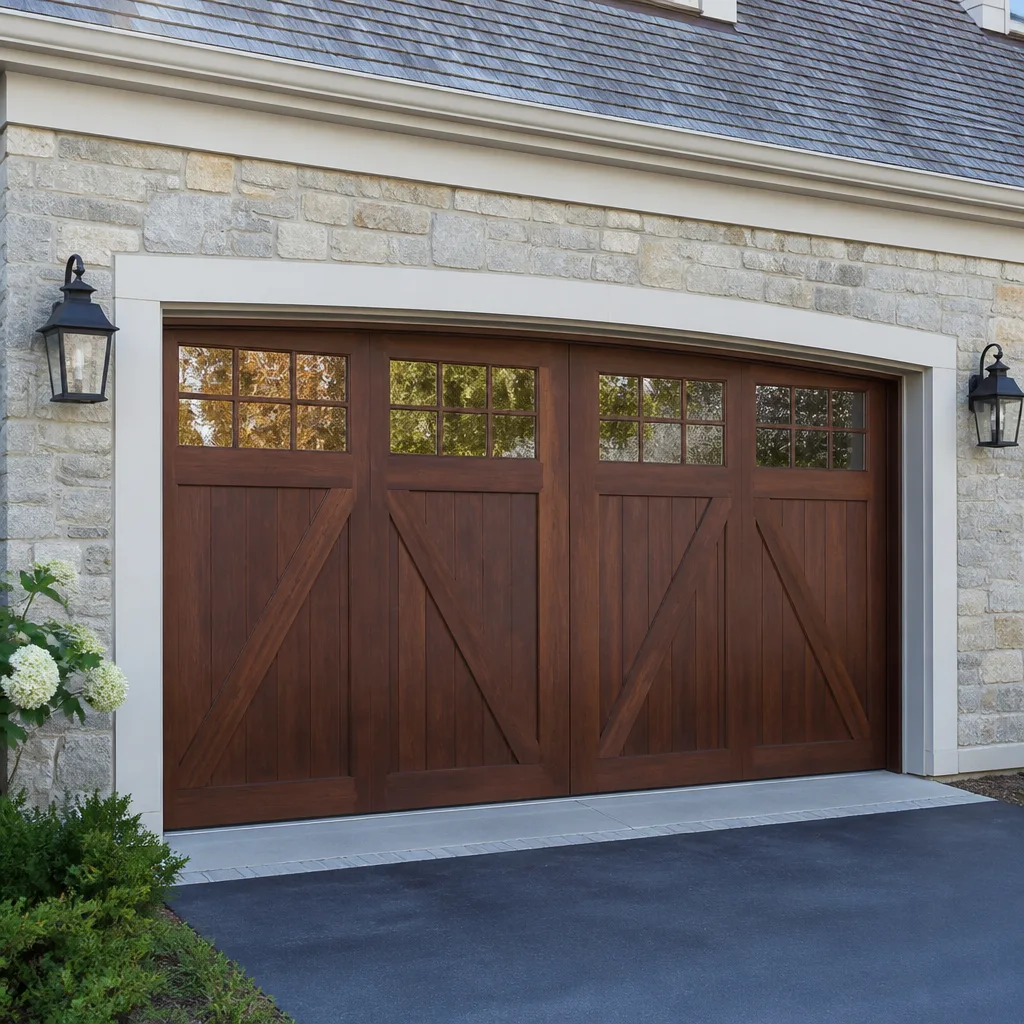 Carriage house
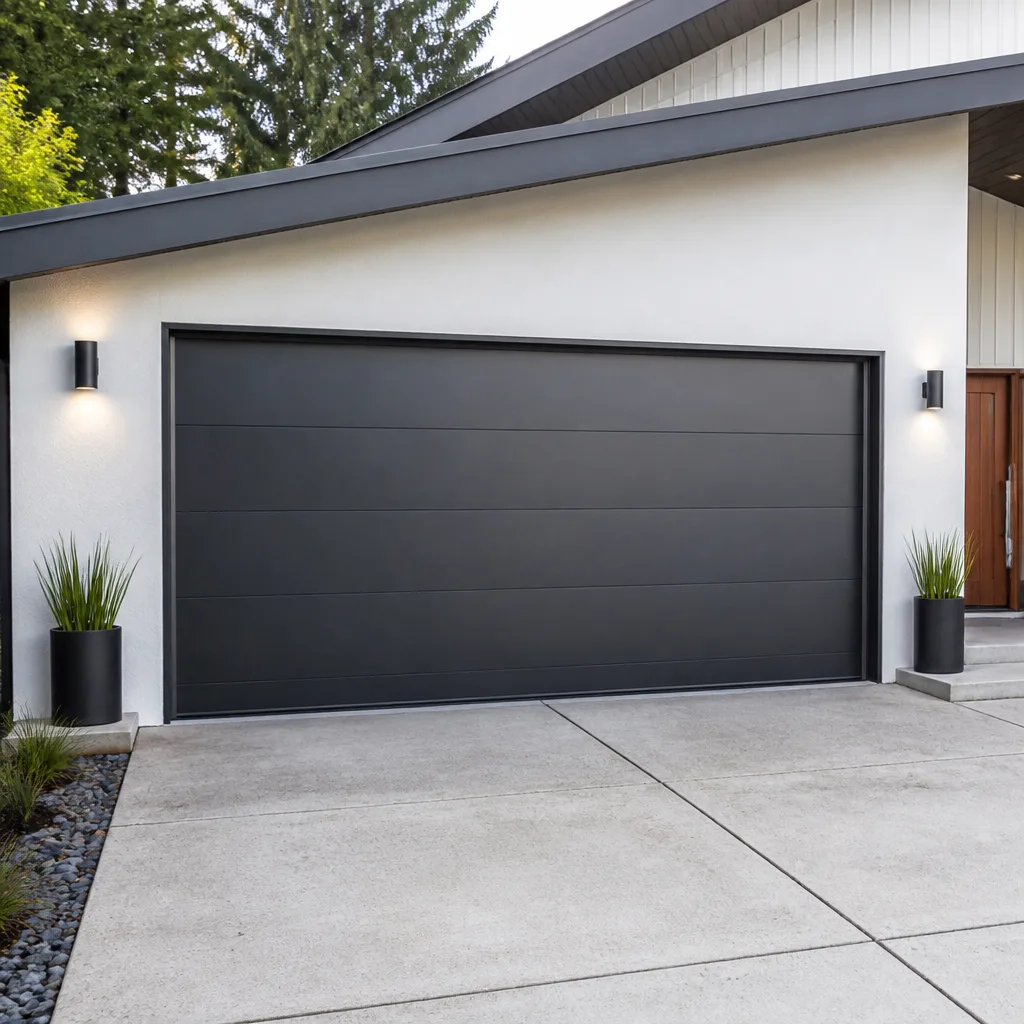 Modern flush
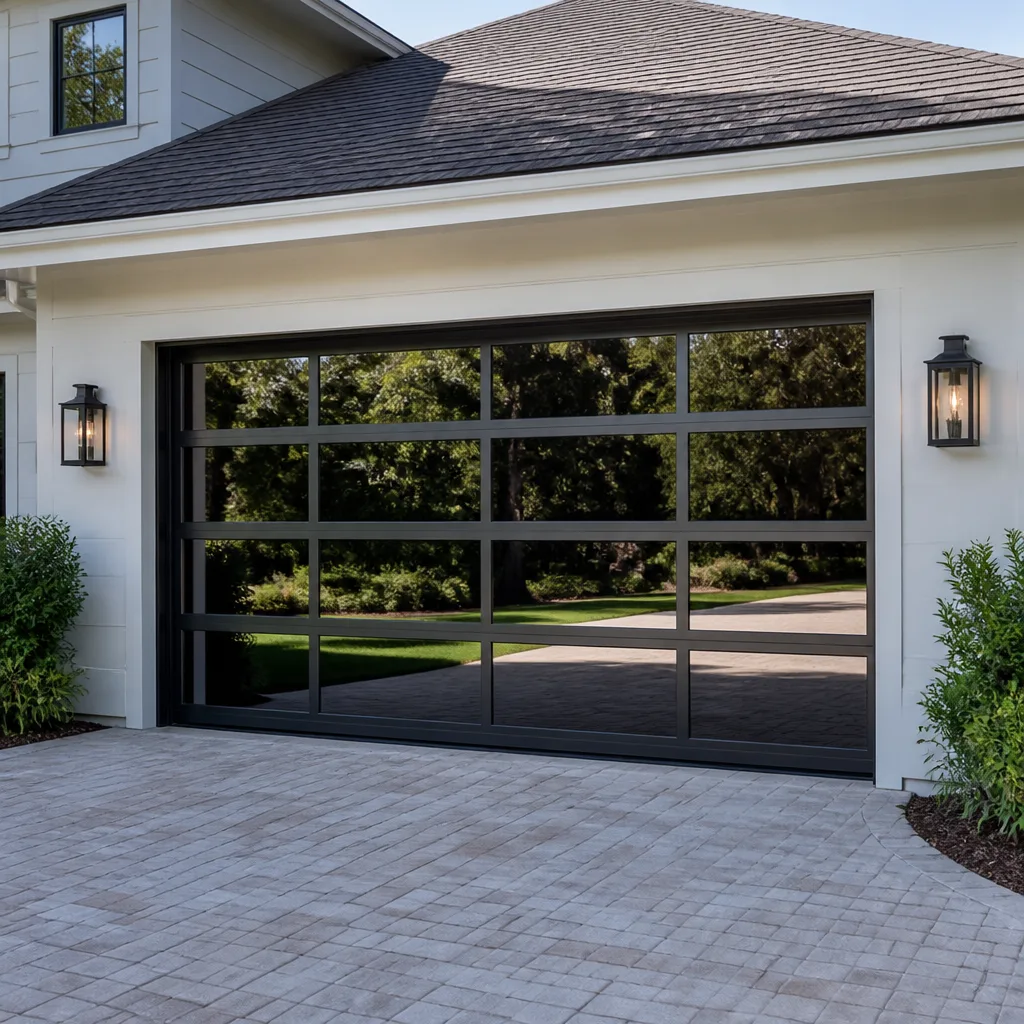 Full-view glass
 LiftMaster openers
 Chamberlain openers
Full 25-point door and opener safety check with every visit - springs, cables, rollers, tracks, and your LiftMaster or Chamberlain opener included
You get a price before we start. It does not change when the truck arrives.
Get your free estimateGarage Door Warning Signs: A Jurupa Valley Homeowner’s Reference Guide
A garage door that hesitates for two seconds before closing is not a quirk. It’s a photo-eye misalignment or a failing logic board, and if it’s the latter, you have days, not months, before it stops working entirely. Most Jurupa Valley homeowners don’t get surprised by a sudden garage door failure because the door broke without warning. They get surprised because nobody taught them which sounds, movements, and visual cues are normal aging versus imminent breakdown. This guide is a symptom-to-cause map, and you can find more guides & resources on our blog. You’ll learn what’s harmless, what’s urgent, what you can inspect yourself in 60 seconds, and which three signs mean you should not touch the door again until a technician arrives.
Styles & brands we work with
- Raised-panel steel
- Carriage house
- Modern flush
- Full-view glass
- LiftMaster openers
- Chamberlain openers
Quick Answer
Garage door warning signs fall into four categories: sound (grinding, squealing, popping, thumping), sight (frayed cables, rusted springs, cracked rollers, bent tracks), behavior (hesitation, reversal, inconsistent remote response), and balance (a door that drifts or slams). In Jurupa Valley, where summer heat and fine dust accelerate component wear, the most common early warnings are dry rollers, loosening hardware, and photo-eye misalignment. If your door makes a loud bang, its cables are frayed, or it’s off-balance, stop using it immediately and call for repair.
Table of Contents
- Sound Symptoms: What Grinding, Squealing, Popping, and Thumping Actually Mean
- The 60-Second Visual Inspection: Springs, Cables, Rollers, and Hardware
- Opener Behavioral Red Flags: Slow Travel, Reversals, and Dead Remotes
- Cosmetic vs. Structural Panel Damage: How to Tell the Difference
- Three Signs That Mean Stop Using the Door Now
- How Jurupa Valley’s Climate Accelerates Garage Door Wear
- What You Can Safely Do Yourself (and What You Shouldn’t)
- Common Mistakes to Avoid
- When to Call a Professional
- Frequently Asked Questions
- The Bottom Line
Sound Symptoms: What Grinding, Squealing, Popping, and Thumping Actually Mean
Garage doors make noise. That’s normal to a point. But the specific character of the noise tells you exactly which component is failing, and knowing the difference can save you from a $400 repair turning into a $1,200 replacement. In our service calls across Jurupa Valley, from Rubidoux to Mira Loma, we hear the same four sounds over and over, and each one points to a different culprit.
Grinding
A metallic grinding sound, especially during the middle section of the door’s travel, almost always means metal-on-metal contact somewhere in the track or roller system. The most common cause is a roller bearing that’s seized. When the bearing stops spinning, the roller drags along the track instead of rolling, and the resulting friction sounds like grinding. On a Wayne Dalton or Clopay door with nylon rollers, this is less common on the roller itself and more often means the track has shifted or bent, causing the roller stem to scrape against the track edge. Left untreated, a seized roller will eventually machine a groove into the track, and you’ll need both a new roller and a new track section. Grinding from the opener motor itself is a different problem, usually the gear and sprocket assembly inside a LiftMaster or Chamberlain opener stripping out. That’s a different sound, more of a chattering grind, and it means the opener is done.
Squealing
Squealing is the sound of friction without lubrication. On a garage door in Jurupa Valley, it’s most often the hinges, the roller stems, or the torsion spring coils rubbing against each other. The spring coils rub together every time the door cycles, and when the factory grease dries out, the spring starts to talk. Squealing is the least urgent sound on this list, but it’s not harmless. Unlubricated components wear faster, and a dry spring that’s squealing today becomes a loud spring in a few months, and a snapped spring eventually. We recommend lubrication at least once a year in this climate, because the dry inland air and summer heat cook the lubricant out faster than coastal homeowners experience.
Popping
A popping or snapping sound as the door moves usually comes from the torsion spring. As a torsion spring ages, the coils can bind and release as the door travels, and the sound is the spring adjusting itself under load. A single pop now and then isn’t necessarily failure, but repeated popping during a cycle means the spring is nearing the end of its life. A spring under torsion holds an enormous amount of energy, and when it finally breaks, the sound is a sharp, loud bang like a gunshot in the garage. If you’re hearing repeated popping, have it looked at before it becomes the loud version. A broken torsion spring means the door won’t open at all, and in Jurupa Valley, that can leave a car trapped in the garage at 7 a.m. on a weekday.
Thumping
A rhythmic thumping or banging during the door’s travel is rarely the door itself. It’s usually the opener’s chain or belt. On a chain-drive opener, like many Genie and older Chamberlain models, a loose chain slaps against the rail as it moves, creating a thump with each cycle. The fix is often a simple chain tension adjustment. On belt-drive openers, a thumping sound can mean the belt is fraying or a pulley is failing. A bent door section can also cause a thumping as the wheels hit the bend, but that’s usually accompanied by visible stuttering in the door’s motion. Whatever the source, thumping is a repetitive stress on the entire system, and catching it early keeps a small adjustment from becoming a broken rail or a snapped belt.
The 60-Second Visual Inspection: Springs, Cables, Rollers, and Hardware
You don’t need tools to spot most garage door problems before they become emergencies. For a deeper look at the process, see our article on How to Hire a Garage Door Contractor in Jurupa Valley: A Step-by-Step Guide. Here’s a step-by-step inspection you can do standing on the floor of your garage in under a minute. We walk through this same checklist on nearly every service call in Jurupa Valley, and it catches the majority of preventable failures. Do this once a month.
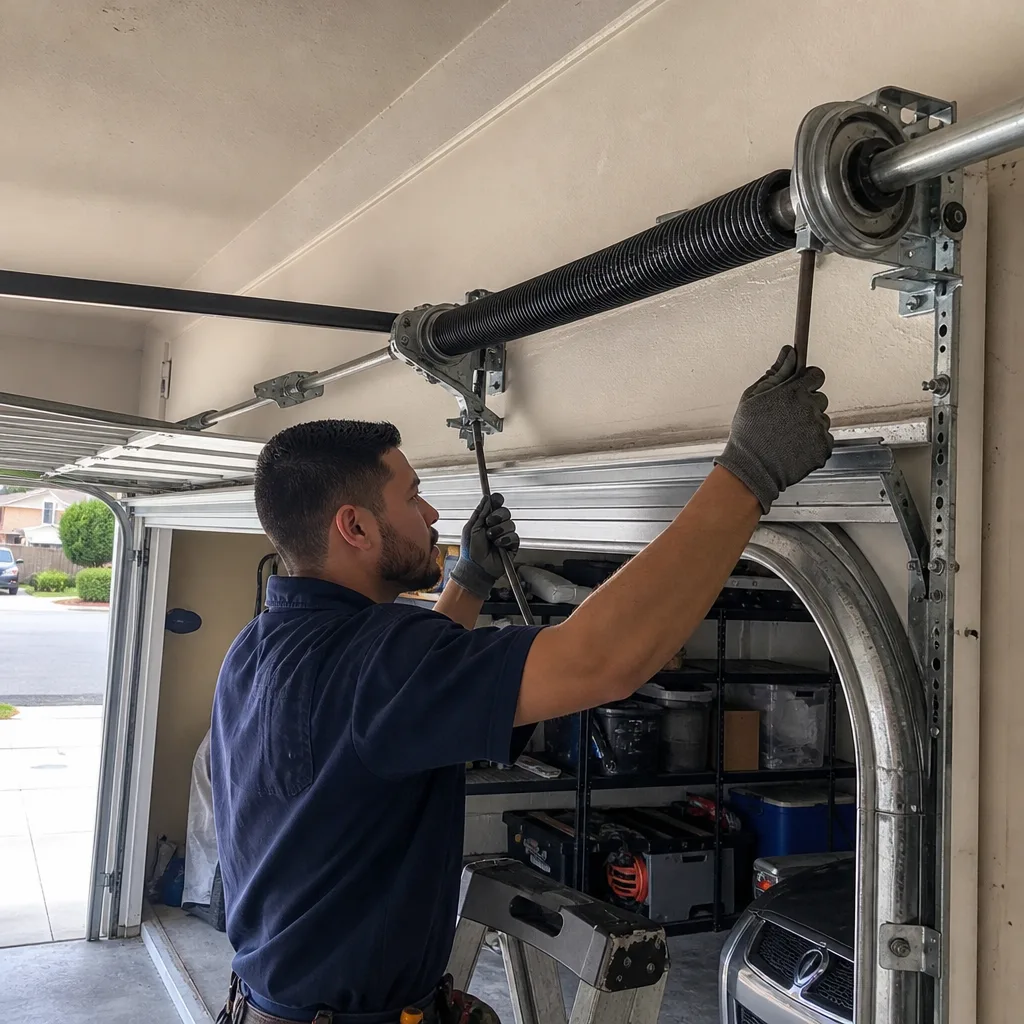
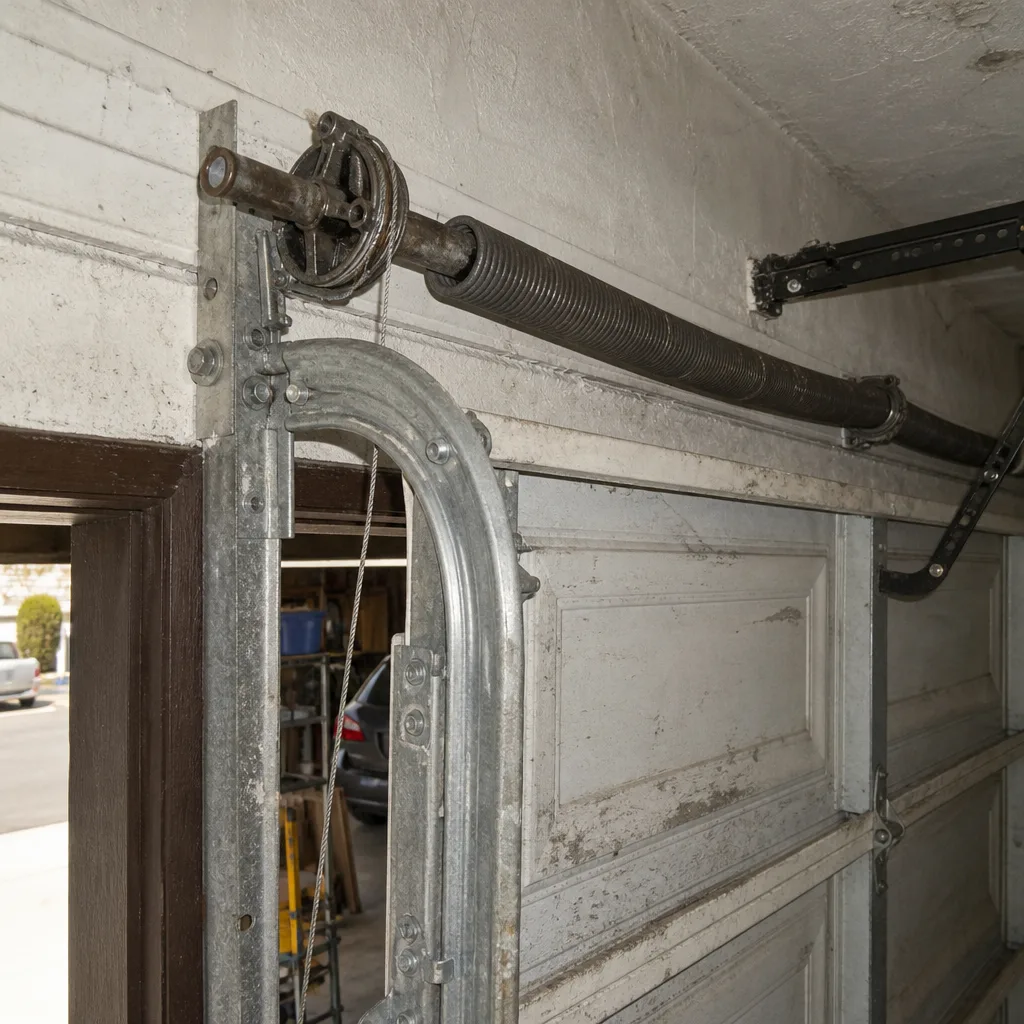
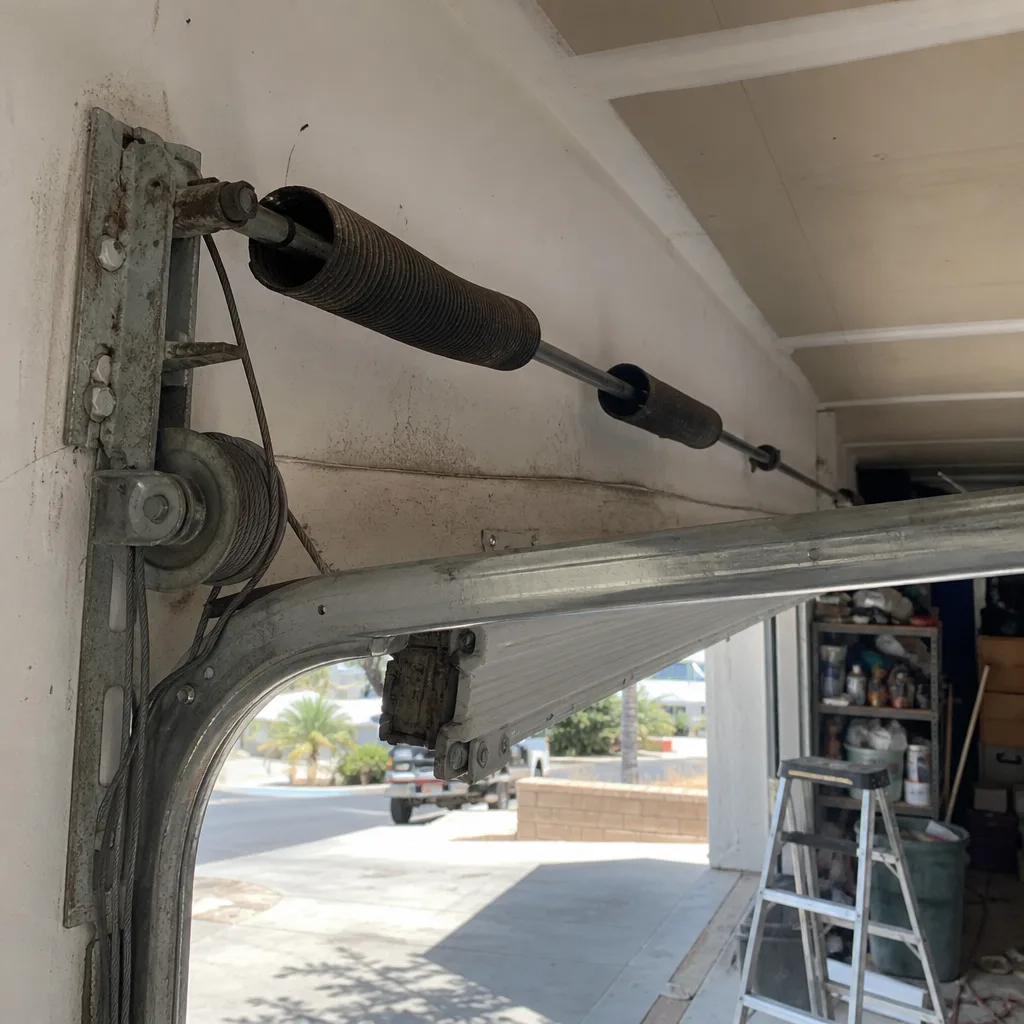
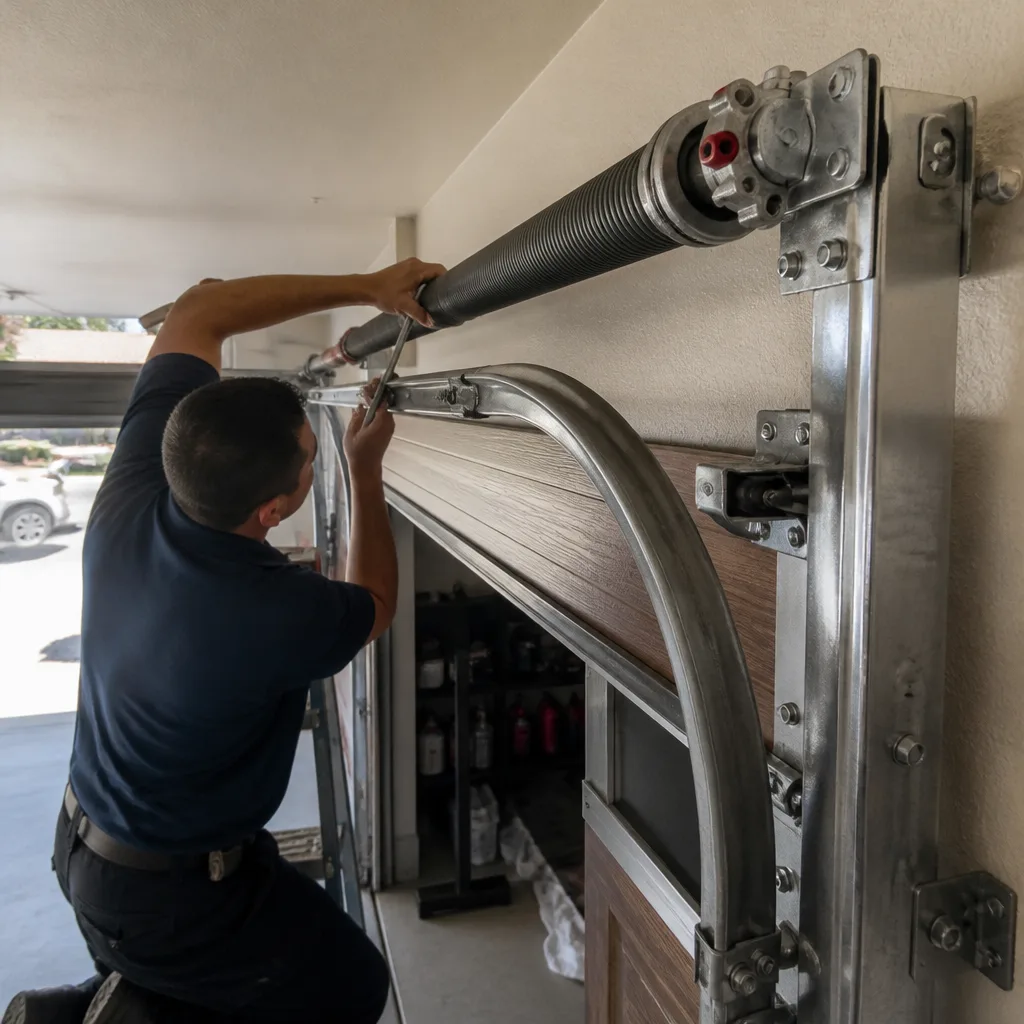
- Look at the torsion spring. It’s the steel coil mounted horizontally on the wall above the door. Check for a visible gap in the coil, rust, or a coil that looks stretched or separated. A healthy spring has tight, uniform coils. Any gap means the spring is broken and needs replacement. Do not attempt to touch or adjust the spring. A torsion spring under tension can cause life-threatening injury if released improperly.
- Trace both lift cables. These are the steel cables running from the bottom of the door up to the drums at the top. Look for fraying, rust, or strands that are separating. Run your eye from the bottom bracket all the way up. A cable that’s beginning to fray is days away from snapping, and when one cable snaps, the door slams down on the other side and can injure anyone near it.
- Check the rollers. With the door closed, look at the rollers on the sides. Cracks, chips, or a wheel that’s visibly worn down or tilted in the track are signs of failure. Nylon rollers from Clopay and Amarr doors last longer than steel, but both wear out eventually. A roller that’s no longer round creates drag that strains the opener and the spring.
- Look at the track. The vertical and horizontal tracks should be straight and parallel. Check for dents, bends, or areas where the track appears to pinch together. A bent track forces the door to work harder and accelerates wear on every moving part. In Jurupa Valley’s dry heat, tracks can also accumulate fine dust that mixes with grease and turns into an abrasive paste, so look for buildup too.
- Scan the hardware. Hinges, brackets, and bolts. Look for loose bolts with visible thread gaps, hinges that are separating from the door, or brackets that appear bent or misaligned. Loose hardware causes the door to shimmy during operation, and a shimmy is transferred stress to everything attached to it.
- Check the door balance. Pull the red emergency release handle on the opener so the door operates manually. Lift the door halfway and let go. It should stay roughly in place. If it drifts down, the spring is losing tension. If it shoots upward, the spring is over-tensioned. Both conditions need correction, and neither is a DIY fix.
This six-step check takes a minute and gives you a clear baseline. If anything looks wrong, call a professional before using the door again, especially if the issue involves the spring or cables.
Opener Behavioral Red Flags: Slow Travel, Reversals, and Dead Remotes
Openers are the brain of the system, and they signal failure through behavior, not through visible damage. Here are the three most common behavioral red flags we see in Jurupa Valley garages, and what each one points to. Find out more about Garage Door Opener Repair in Jurupa Valley.
Slow Travel
A door that travels noticeably slower than it used to, or slower in one direction than the other, usually points to one of three things: the opener motor is wearing out, the door’s springs are losing tension and forcing the motor to work harder, or the tracks and rollers have developed enough friction to slow everything down. On LiftMaster and Chamberlain openers with built-in force sensitivity, a struggling motor draws more current and may eventually trip a safety limit. When a door that’s moved at a consistent speed for years suddenly slows down, don’t ignore it. The motor is telling you it’s working against something.
Reversal Without Obstruction
A Genie, LiftMaster, or Chamberlain opener that reverses course mid-close for no apparent reason is almost always a photo-eye issue. The photo eyes are the two sensors mounted near the floor on either side of the door. If they’re misaligned, dirty, or staring directly into the sun, the opener thinks something is in the door’s path and reverses. In Jurupa Valley, where afternoon sun hits west-facing garages hard, we see seasonal photo-eye problems every year. The fix is often a simple realignment or cleaning, but sometimes the sensors are failing and need replacement. A less common cause of false reversals is a failing logic board, which misinterprets signals from the travel limit. If you’ve realigned the sensors and the problem persists, that’s a board-level issue, not a sensor issue.
Inconsistent Remote Response
A remote that works only when you’re standing close to the garage door, or works intermittently from the same distance, points to one of three fixes. The most common is a failing remote battery, which is the easiest and cheapest fix. The second most common is interference from other electronics in the area. Jurupa Valley has dense residential neighborhoods, and overlapping Wi-Fi networks, LED lights, and baby monitors can all interfere with opener frequencies, especially older models using 315 MHz or 390 MHz bands. The third possibility, and the one we often find after homeowners have already tried new batteries, is a failing receiver board in the opener itself. On a Genie or Chamberlain unit that’s 10 to 15 years old, the receiver is usually the weak point. If a new battery and a clear line of sight don’t fix the problem, the opener probably needs repair or replacement.
We work on all of these brands, so if you’re not sure whether the issue is the remote, the sensors, or the board, a diagnostic visit pins it down in one trip rather than a series of guesses.
Cosmetic vs. Structural Panel Damage: How to Tell the Difference
Dings, dents, and cracks on garage door panels are common in Jurupa Valley. Kids’ bikes, basketballs, and the occasional runaway car all take their toll. Most panel damage is cosmetic and doesn’t affect the door’s operation. But some damage is structural, and failing to recognize the difference can lead to a door that comes off its tracks or a spring that breaks prematurely.
The distinction is simple: cosmetic damage affects the appearance of the panel, while structural damage affects the panel’s ability to carry load. A door panel is more than a flat face. It has a frame, internal ribs or insulation, and mounting points for hinges and struts. When damage compromises any of these, the panel stops behaving as a rigid structural unit.
Here’s how to tell the difference. A shallow dent in the middle of a panel, with no crease, is cosmetic. The panel is still flat and rigid, hinges are unaffected, and the door tracks straight. A dent with a sharp crease that runs across the panel is worse. The crease is a weak point, and every time the door opens, the panel flexes along that line. Over time, flexing leads to fatigue cracking. A crack that runs from hinge to hinge, or from the top edge to the bottom edge, is structural. The panel has lost its rigidity, and when the door lifts, the panel bends rather than stays flat. That bending is transmitted to the hinges and the rollers, which then bind in the tracks. A severely bent or cracked panel can also throw off the door’s balance, which forces the spring to work harder and shortens its life.
On a Clopay or Amarr steel door, severe panel damage often means replacement of the affected sections. If you’re weighing brands, our Choosing the Right Garage Door Brand: A Buyer’s Guide for Jurupa Valley can help. On an older wooden door, damage can be repaired with reinforcement braces in some cases, but the economics depend on the door’s age and overall condition. If you’re unsure whether a dent is a problem, watch the door operate. If the panel flexes, shudders, or catches in the track as it moves, it’s structural. If the door moves smoothly, the damage is probably just ugly.
For homeowners considering upgrading a dented or crack-prone door, we provide Garage Door Installation in Jurupa Valley for full replacements matched to your existing tracks and opener.
Three Signs That Mean Stop Using the Door Now
Most garage door problems can be monitored for a week or two while you arrange service. These three cannot. If you see or hear any of the following, stop operating the door immediately, unplug the opener, and leave the door in whatever position it’s in. These are not “keep an eye on it” situations. They are “don’t touch it until a technician arrives” situations.
1. A Frayed or Damaged Lift Cable
Lift cables are under constant, extreme tension. They hold the weight of the entire door whenever it’s moving, and even when it’s at rest in the open position. A cable that’s fraying or has visible broken strands is holding on by remaining strands, and each cycle of the door stretches those strands a little further. When the cable snaps, it releases with tremendous force and the door slams to one side. If you’re standing near the door when that happens, the risk of serious injury is real. Any visible fraying means no more operation. The cable needs to be replaced, and the door needs to be reset and rebalanced. This is absolutely a professional repair. Cables under tension can cause severe injury if handled incorrectly.
2. A Loud Bang Followed by the Door Not Opening (Broken Spring)
If you hear a bang like a gunshot in the garage and the door either won’t open or slams shut on the way down, a torsion spring has broken. The spring is the counterweight to the door’s weight. Without it, the opener motor is trying to lift several hundred pounds of door with no mechanical advantage, which it can’t do. Some openers have a safety cutout, others will destroy their own gears trying. Either way, do not force the door open or closed. The door is now an unbalanced mass, and any attempt to move it puts you at risk. A broken spring is a same-day repair in most cases, and in Jurupa Valley, where garages are the primary entrance for most homes, it’s a priority call. Check out our Garage Door Repair in Jurupa Valley page for what a spring repair involves.
3. An Off-Balance Door
An off-balance door is a door whose spring tension is no longer matched to its weight. You’ll notice it when you manually lift the door and it drifts down or shoots up instead of holding position. An off-balance door is dangerous because it’s unpredictable. It can slam shut with force, or it can fly open and snap cables. It also overloads the opener, which was designed to move a balanced door, not to hold an unbalanced one. Balance problems are caused by a spring that’s wearing out, a spring that was installed too large or too small, or a door whose weight has changed due to panel replacement, insulation, or water absorption. Whatever the cause, the door is a hazard until the spring tension is corrected, and correcting spring tension is not a homeowner task.
How Jurupa Valley’s Climate Accelerates Garage Door Wear
Jurupa Valley’s climate is hard on garage door components in ways that coastal California homeowners never experience. For a complete maintenance calendar, read our Seasonal Garage Door Care for Jurupa Valley: Year-Round Homeowner’s Guide. The inland Riverside County heat, the dry air, and the fine dust that blows through from the Santa Ana River basin all combine to wear out parts faster than the manufacturer’s average lifespan suggests. Here’s what that means for your door.
First, heat. Summer temperatures in Jurupa Valley routinely pass 100 degrees, and your garage amplifies that. A closed garage on a summer afternoon can reach 120 to 130 degrees. That kind of sustained heat degrades rubber seals, warps non-insulated panels, and breaks down the factory grease in torsion springs and hinges. A spring that would last 10,000 cycles in a mild climate may fail at 8,000 cycles here. Grease that should last a year cooks dry in six months. If you’re not lubricating your springs, hinges, and rollers at least annually, you’re running them dry through the worst of the summer.
Second, dust. Fine airborne dust settles on every horizontal surface in your garage, including the tracks, the spring, and the chain or belt on your opener. This dust mixes with lubricant and forms a paste that’s more abrasive than no lubricant at all. We see tracks in Mira Loma and Rubidoux garages that are coated in a sand-and-grease mixture thick enough to feel with a finger. That paste accelerates roller wear, increases motor strain, and shortens opener life. A simple wipe-down of the tracks during your monthly inspection goes a long way.
Third, temperature swings. The desert climate swings 30 to 40 degrees between day and night, and those cycles cause metal components to expand and contract. Bolts loosen. Track brackets shift. Cables develop slack, then tighten again. None of this is catastrophic on its own, but it means hardware needs periodic tightening. Loose hardware is the most common root cause of doors that come off their tracks, and it’s the easiest thing to catch early with a 60-second visual inspection.
What You Can Safely Do Yourself (and What You Shouldn’t)
Homeowners often ask us what they can handle on their own. The honest answer splits into two lists. There are maintenance tasks that are genuinely safe for a homeowner with basic tools, and there are repair tasks that should never be attempted without training and the right equipment. Here’s the boundary.
Safe to do yourself:
- Lubricate rollers, hinges, and springs with a garage-door-specific lubricant or white lithium grease. Do not use WD-40 as a permanent lubricant; it’s a solvent that strips away existing grease.
- Tighten visible bolts and brackets on the track and hinges using a socket wrench. Check the bolts on the door sections where the hinges mount. Loose hardware is the most common cause of rattles and off-track incidents.
- Clean the photo-eye lenses with a soft cloth. Dirt and spider webs on the sensors are one of the most common causes of false reversals, and a quick wipe fixes it.
- Realign the photo-eye sensors if one has been bumped out of position. The sensors have small indicator lights that turn solid when aligned. If a light is flickering or off, the sensor needs adjustment.
- Replace remote batteries and reprogram a remote that’s lost its sync.
Not safe to do yourself, regardless of YouTube confidence:
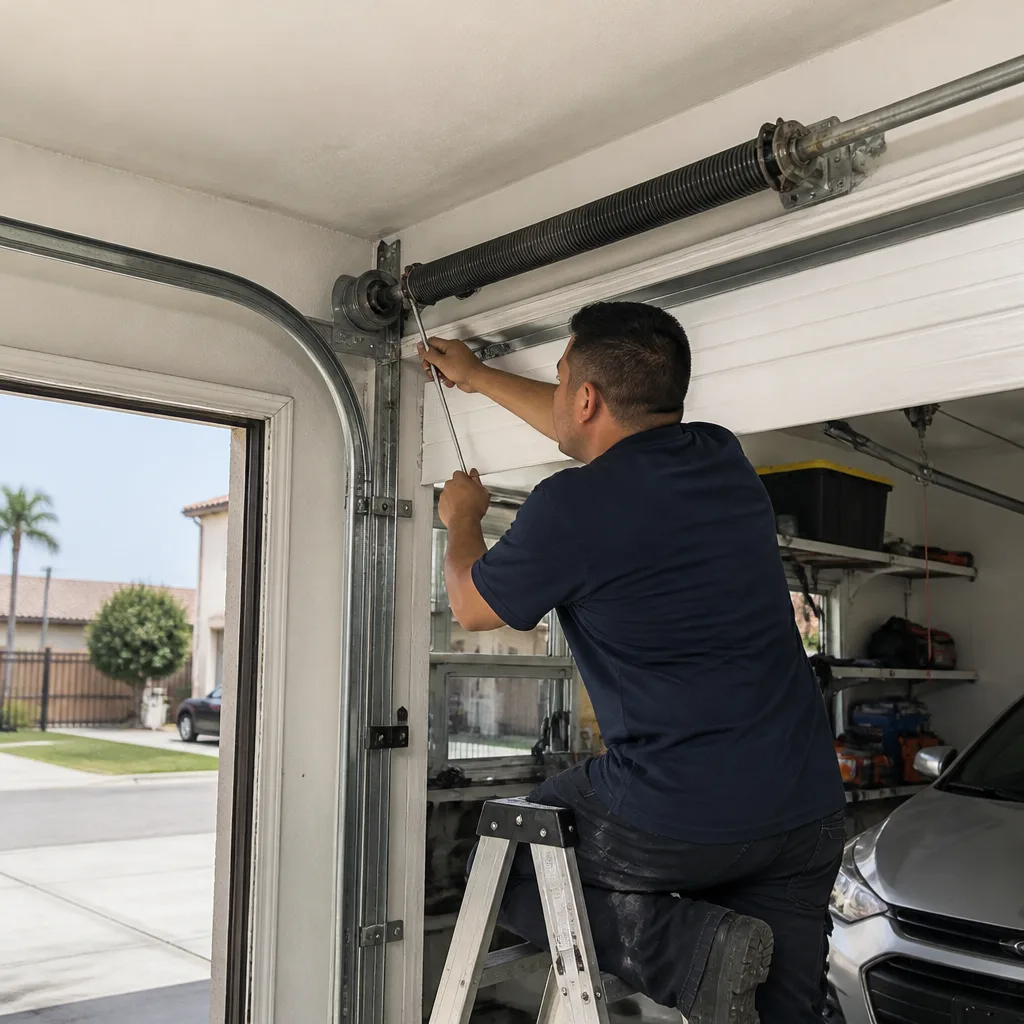
- Torsion spring repair or replacement. The spring stores enough energy to maim or kill. There’s a specialized winding procedure, and a mistake means the spring releases that energy at close range. Do not attempt it. This is a professional-only repair, period.
- Cable replacement. Cables under tension will whip or snap when released improperly. The safe procedure requires releasing door weight, securing the door, and replacing cables with the spring de-tensioned. Not a homeowner job.
- Track removal or major realignment. Bent tracks need to be straightened or replaced with the door supported. A door that slips off its track while you’re working on it can fall on you.
- Opener motor or logic board repair. Openers combine line voltage electricity with moving parts. Except for the remote and sensor alignment, opener internals are professional territory.
- Any repair to a door that’s off-balance. A door that drifts or slams is a hazard to work on. Get the spring tension corrected first.
If you’re not sure whether a task is on the safe list, the easiest test is to call us and ask. We’re happy to tell you if something is a $15 DIY fix or a professional repair, and we don’t charge for the answer.
Common Mistakes to Avoid
- Ignoring a new sound because the door still works. A squeal or pop today is a snapped spring or a stripped gear in a few months. The door works right up until the moment it doesn’t, and the repair is always bigger when it’s an emergency.
- Lubricating everything with WD-40. WD-40 is a solvent. It strips existing grease and leaves moving parts drier than before. Use a garage-door lubricant or white lithium grease.
- Continuing to use a door with a frayed cable. A frayed cable is not a “monitor it” problem. It’s a stop-using-the-door problem. The cost of a cable replacement is small compared to the cost of the damage and injury a cable failure can cause.
- Replacing the opener when the problem is the door. A slow or struggling door is often caused by failing springs or dry rollers, not a bad motor. We diagnose first and replace parts based on what’s actually failing, which is why we repair openers instead of defaulting to replacement.
- Treating all panel damage as cosmetic. A creased or cracked panel flexes every cycle and transfers stress to hinges, rollers, and springs. If you can see the panel move when the door operates, it’s structural.
- Doing their own torsion spring work because a video made it look easy. We’ve seen the injuries from this. The spring is the one component on your garage door that can kill you. Hire it out.
- Waiting until the door fails completely to call. Weekend failures cost more and wait longer. Most warning signs show up weeks or months before a failure. Catch them early and schedule on your terms.
When to Call a Professional
Call when the warning sign involves tension: springs, cables, or balance. Call when the door is off its tracks or a panel has structural damage. Call when the opener is behaving erratically despite a new battery and clean sensors. And call when you’ve done the 60-second inspection and something looks wrong that isn’t on the safe DIY list. Repair is almost always cheaper before a failure than after one. Briarwood Garage Door Repair offers free estimates in Jurupa Valley. Call (866) 569-5176 for a same-week appointment, and we’ll tell you exactly what’s wrong and what it costs before any work starts.
Frequently Asked Questions
Garage door spring repair in Jurupa Valley typically runs between $180 and $350 depending on spring type, door weight, and whether one or both springs are replaced. Single spring replacement is cheaper, but if both springs are the same age, replacing both at once is usually the better value because the second usually fails within months of the first. Call (866) 569-5176 for a free estimate, and we’ll quote a firm price before we start any work.
A loud bang when the door closes usually means a spring has broken or a component has failed. If the door still closes after the bang but makes a thunderous noise at the moment of contact, the spring may have snapped but the door is still partially supported by the other spring. If the door slams shut and won’t open again, the spring failure is complete. Stop using the door and call for repair immediately.
No, you should not use your garage door with one broken spring. The remaining spring is now carrying double its rated load and will fail soon, and the opener motor is working against an unbalanced door. A door with a broken spring is an unbalanced mass that can slam shut or jump the tracks and injure someone. Call for repair before using the door again.
Reduced remote range usually means a failing remote battery, interference from nearby electronic devices, or a failing receiver in the opener. Start with the battery. If the problem persists, try replacing the LED bulbs in or near the opener with incandescent bulbs, since some LED bulbs emit interference that blocks remote signals. If range is still poor, the receiver board is likely failing. A new opener isn’t always necessary; receiver repairs are possible on many LiftMaster and Genie models.
In Jurupa Valley, an annual inspection is the practical minimum. The heat, dust, and temperature swings in this area shorten component life compared to coastal climates. A technician can catch spring fatigue, cable fraying, and track misalignment before they become failures. If your door sees heavy use, twice a year is better.
The most common emergency we see in Jurupa Valley is a snapped torsion spring. The combination of extreme heat and dry air accelerates spring fatigue, and when a spring fails, the door will not open. The car is trapped in the garage, and the homeowner needs the door working before work. It’s the reason we carry a full range of spring sizes on the truck and can typically complete a spring replacement in a single visit.
The Bottom Line
Garage doors fail in predictable patterns. The sounds they make, the way they move, and the visible condition of their springs, cables, and rollers tell you everything you need to know weeks or months before a breakdown. The key is knowing which symptoms are urgent and which ones are routine maintenance. A squeak is maintenance. A frayed cable is an emergency. A slow door is a warning. A door that won’t hold its balance is a hazard. Do the 60-second inspection once a month. Don’t touch the spring or the cables. And when something looks wrong, make the call before it becomes a 7 a.m. breakdown. Briarwood Garage Door Repair is based in Jurupa Valley and serves the surrounding Riverside County area. Whatever brand is on your door, we know it.
Written by the team at Briarwood Garage Door Repair, serving Jurupa Valley since 2018.
See the difference
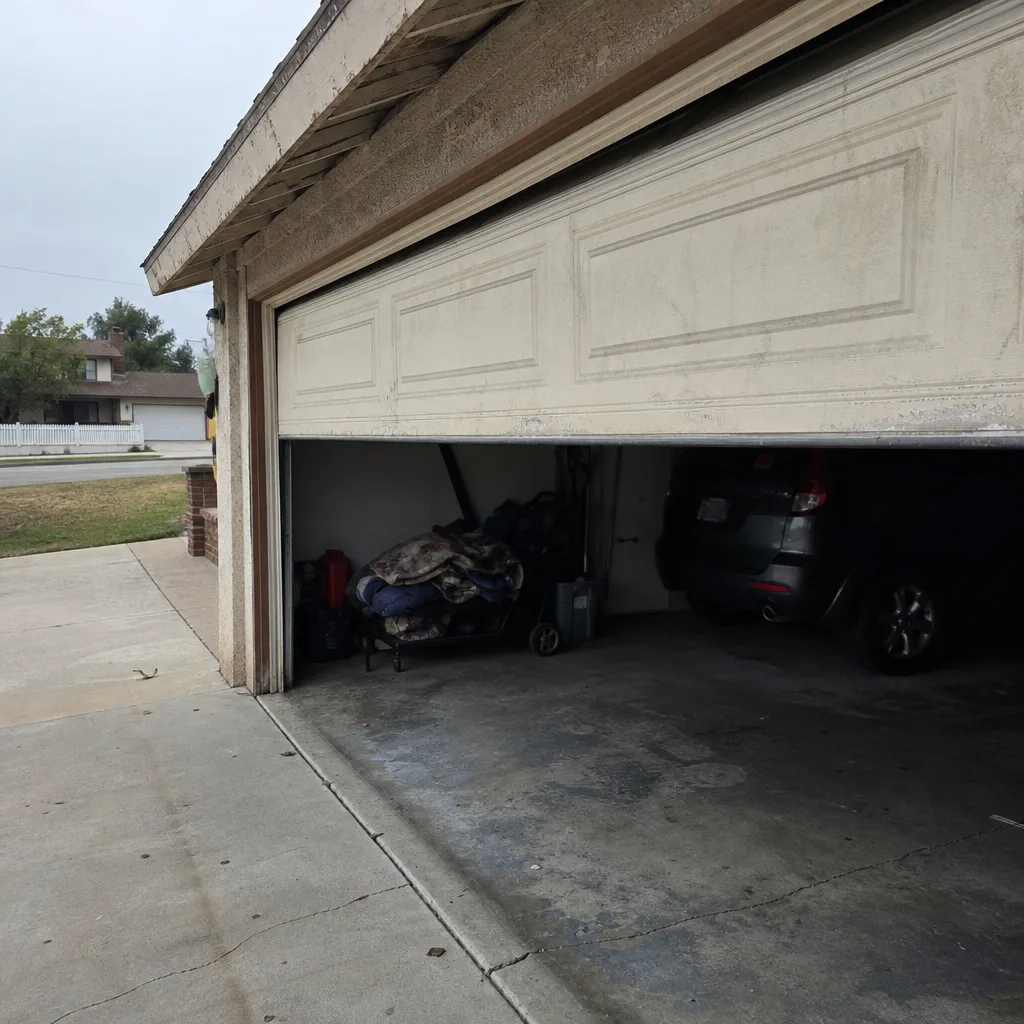 Before
 After
 Before
 After
 Before
 After