
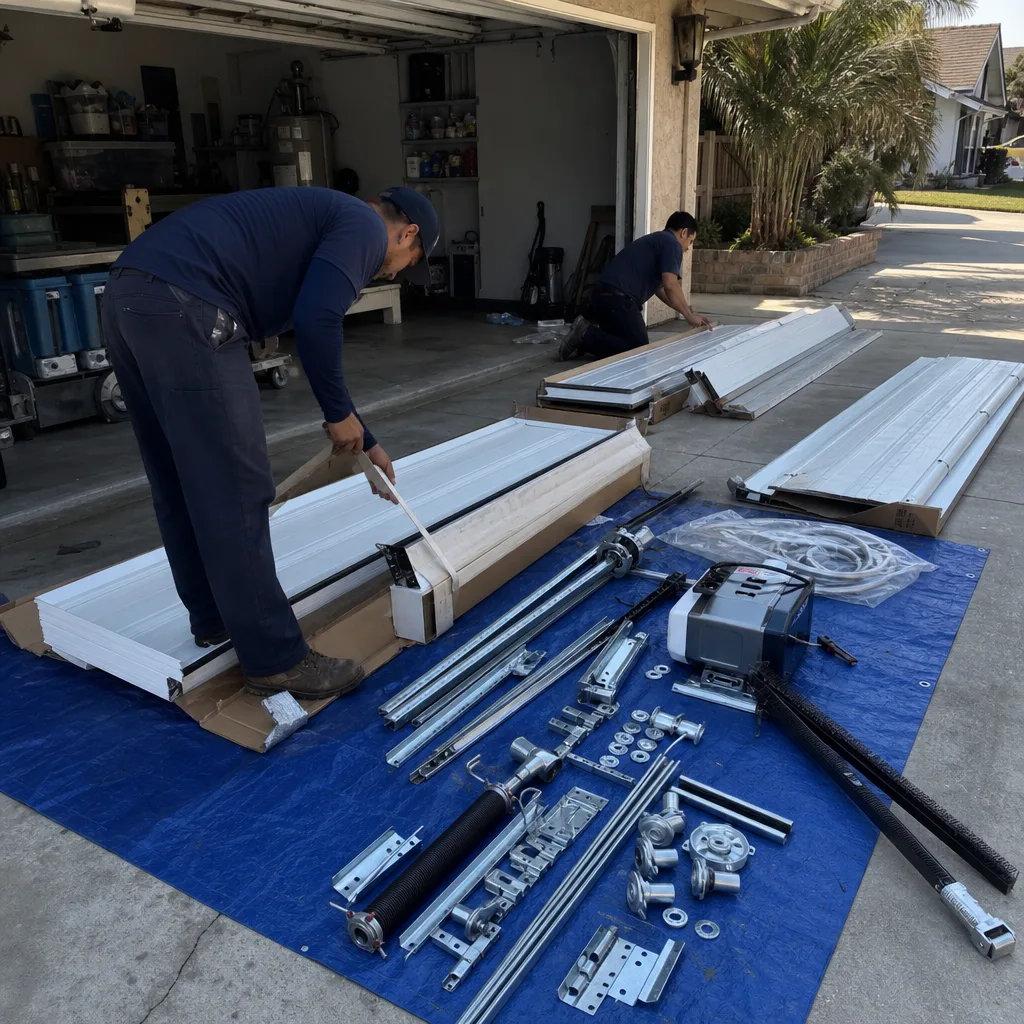
Last updated November 3, 2026
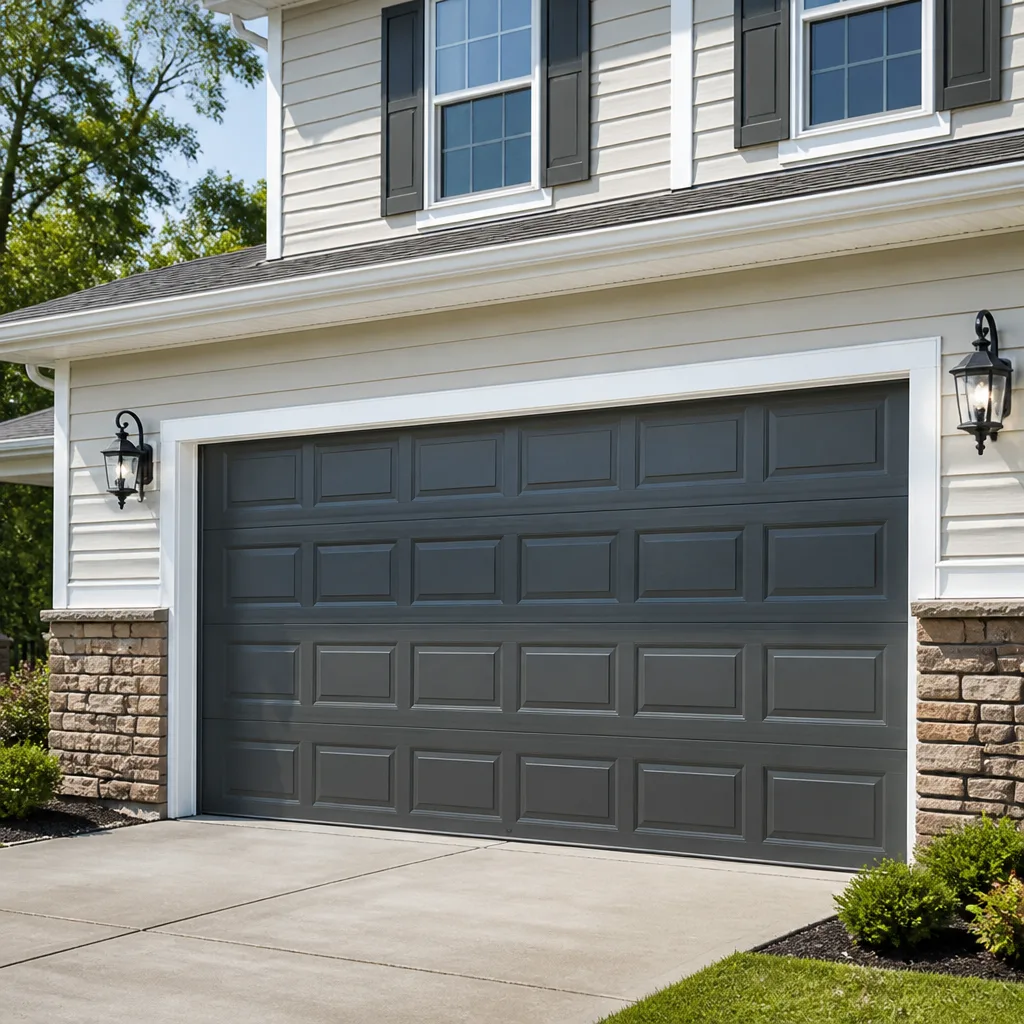 Raised-panel steel
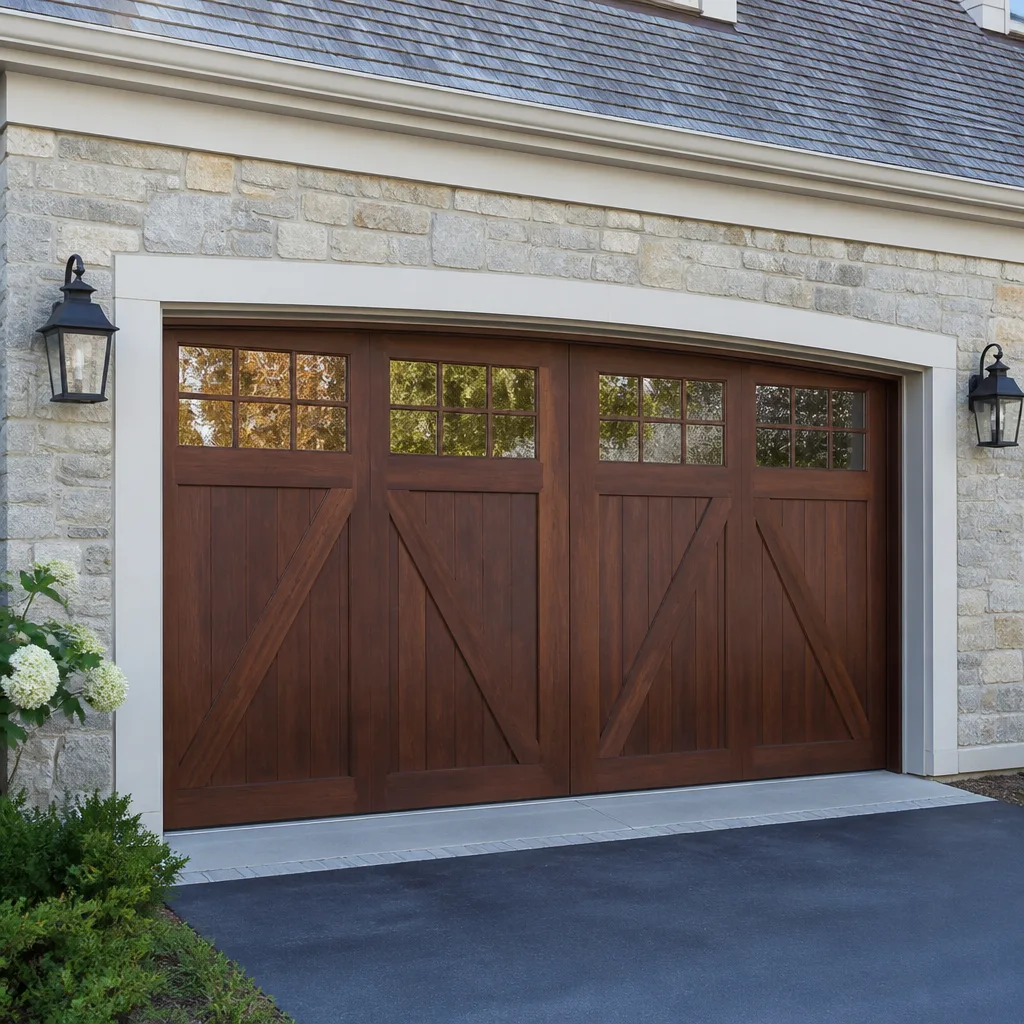 Carriage house
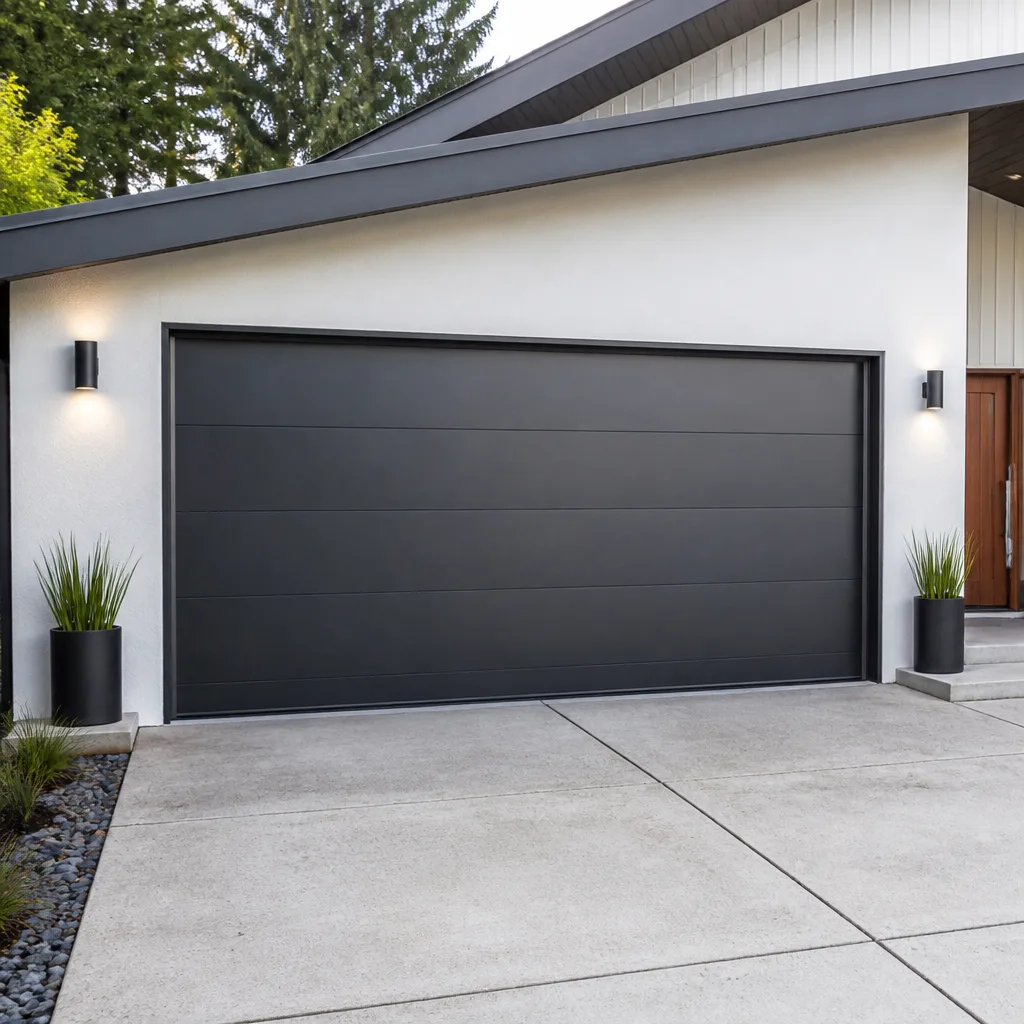 Modern flush
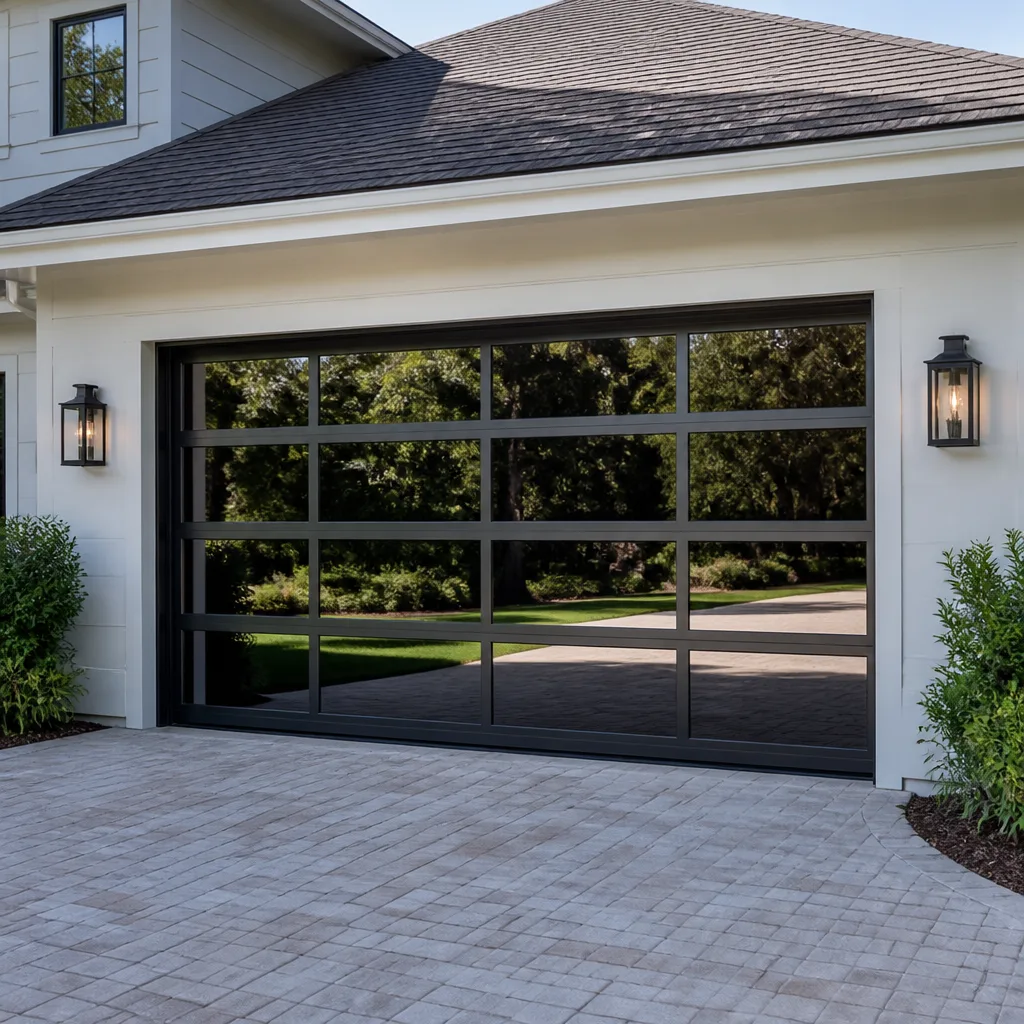 Full-view glass
 LiftMaster openers
 Chamberlain openers
Full 25-point door and opener safety check with every visit - springs, cables, rollers, tracks, and your LiftMaster or Chamberlain opener included
You get a price before we start. It does not change when the truck arrives.
Get your free estimateThe Complete Garage Door Repair Guide for Jurupa Valley Homeowners
Most garage door failures in Jurupa Valley don’t happen randomly. They follow a pattern tied directly to how this city is built and what its climate does to metal, plastic, and circuitry. One July afternoon on a west-facing garage in the Mira Loma area, the interior temperature can sit well above 115°F even when the outside air reads 95°F. Multiply that by 90 consecutive days, year after year, and you get spring metal that fatigues on a predictable schedule, roller bearings that grind through their grease, and opener circuit boards that cook inside their own plastic housings. This guide connects each symptom you’re likely to see to the local condition that causes it, then walks through what’s safe to handle yourself, what isn’t, what repairs actually cost, and how to read a repair quote without getting taken. For The Complete Guide to Garage Door in Jurupa Valley, see our full resource.
Quick Answer
Garage Door Repair in Jurupa Valley typically costs between $125 and $450 depending on the failed component, and most single-part repairs are completed the same day. The most common failures locally are torsion spring fractures from sustained heat exposure, cable wear accelerated by desert dust, and opener logic board degradation from extreme attic-to-garage temperature swings. Matching the repair to the right local cause is the difference between a fix that lasts three months and one that lasts eight years.
Styles & brands we work with
- Raised-panel steel
- Carriage house
- Modern flush
- Full-view glass
- LiftMaster openers
- Chamberlain openers
Table of Contents
- How Jurupa Valley’s Climate Causes Garage Door Failures
- Spring Failures: The Most Common Repair in Jurupa Valley
- Cable and Roller Wear: What Desert Dust Does to Moving Parts
- Opener Failures: Heat, Logic Boards, and When Repair Beats Replacement
- Repair or Replace: A Decision Matrix for Jurupa Valley Homes
- What’s Actually DIY-Safe vs. What Needs a Pro
- How to Read a Garage Door Repair Quote Line by Line
- Brand-Specific Quirks in Jurupa Valley Tract Homes
- Common Mistakes to Avoid
- When to Call a Professional
How Jurupa Valley’s Climate Causes Garage Door Failures
Inland Empire summer heat regularly pushes garage temperatures past 120°F, a threshold that accelerates spring fatigue, warps bottom seals, and degrades opener logic boards faster than manufacturers’ warranties account for. The Jurupa Valley microclimate sits in a thermal sweet spot for component stress: hot enough to alter metal properties, dry enough to destroy lubricants, and windy enough to coat every moving part with fine particulate from the Santa Ana riverbed and surrounding agricultural parcels.
Here’s what that means in practical terms. A torsion spring rated for 10,000 cycles may fail at 6,000 cycles when it lives in a Jurupa Valley garage that bakes daily from April through October. The steel loses temper slightly with each extreme heat cycle, and that cumulative stress shortens the spring’s working life. The same principle applies to nylon rollers, which dry out and crack, and to rubber bottom seals, which shrink and pull away from the slab at the corners. Homeowners who understand this pattern catch failures early instead of discovering them when the door won’t open on a Monday morning.
Our service area covers every major Jurupa Valley neighborhood, from the older tracts near the 60 freeway to the newer developments off Van Buren. The age of the home matters. Newer builds tend to have entry-level single-spring systems that garage door repair in Jurupa Valley technicians see fail at the earliest age. Older homes may have double-spring systems that last longer but cost more to convert when one spring snaps.
Spring Failures: The Most Common Repair in Jurupa Valley
When a homeowner calls us about a door that suddenly won’t lift, the cause is a snapped torsion spring in roughly 60% of cases. In Jurupa Valley, spring failure clusters in two seasons: late summer, when cumulative heat fatigue peaks, and early winter, when the first cold snap causes the already-weakened steel to contract and fracture. Knowing which season you’re in doesn’t change the repair, but it does explain why your neighbor’s spring snapped the same week yours did.
How to confirm a spring has failed:
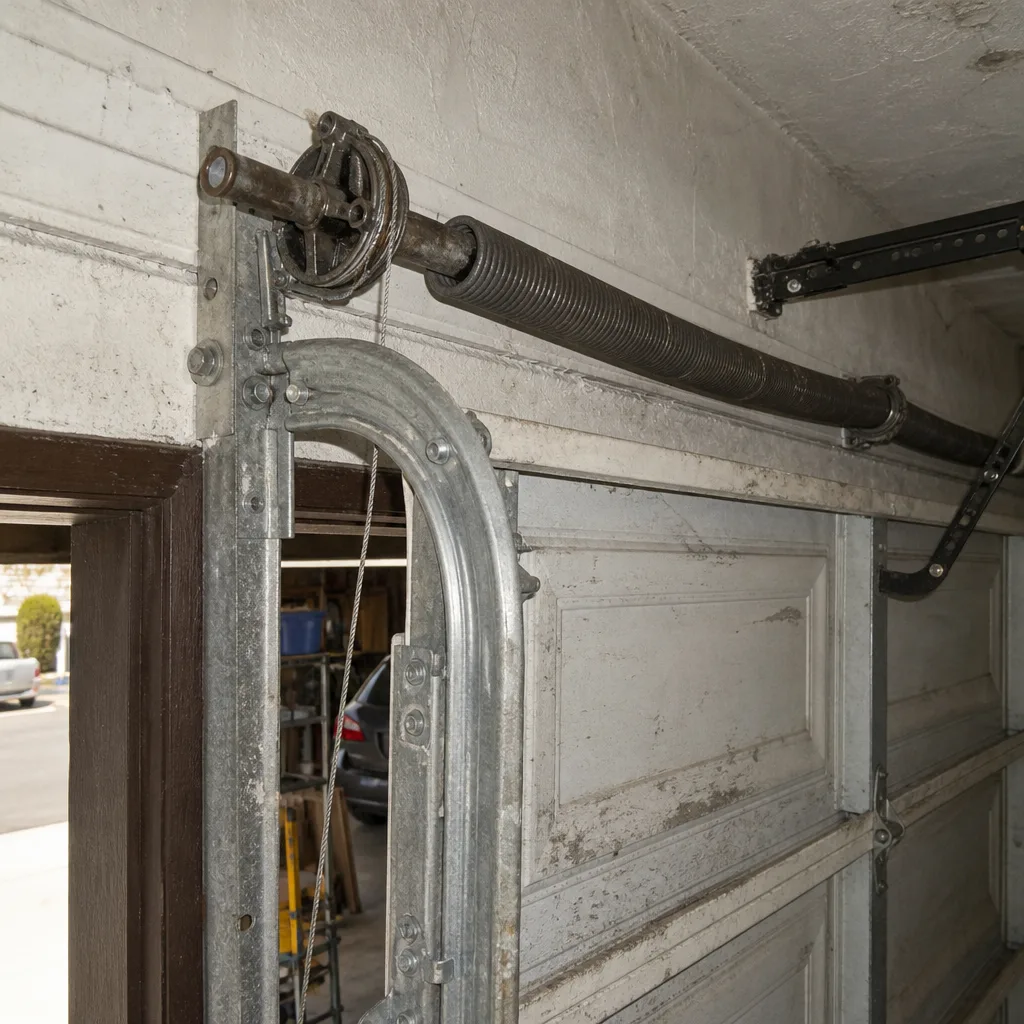
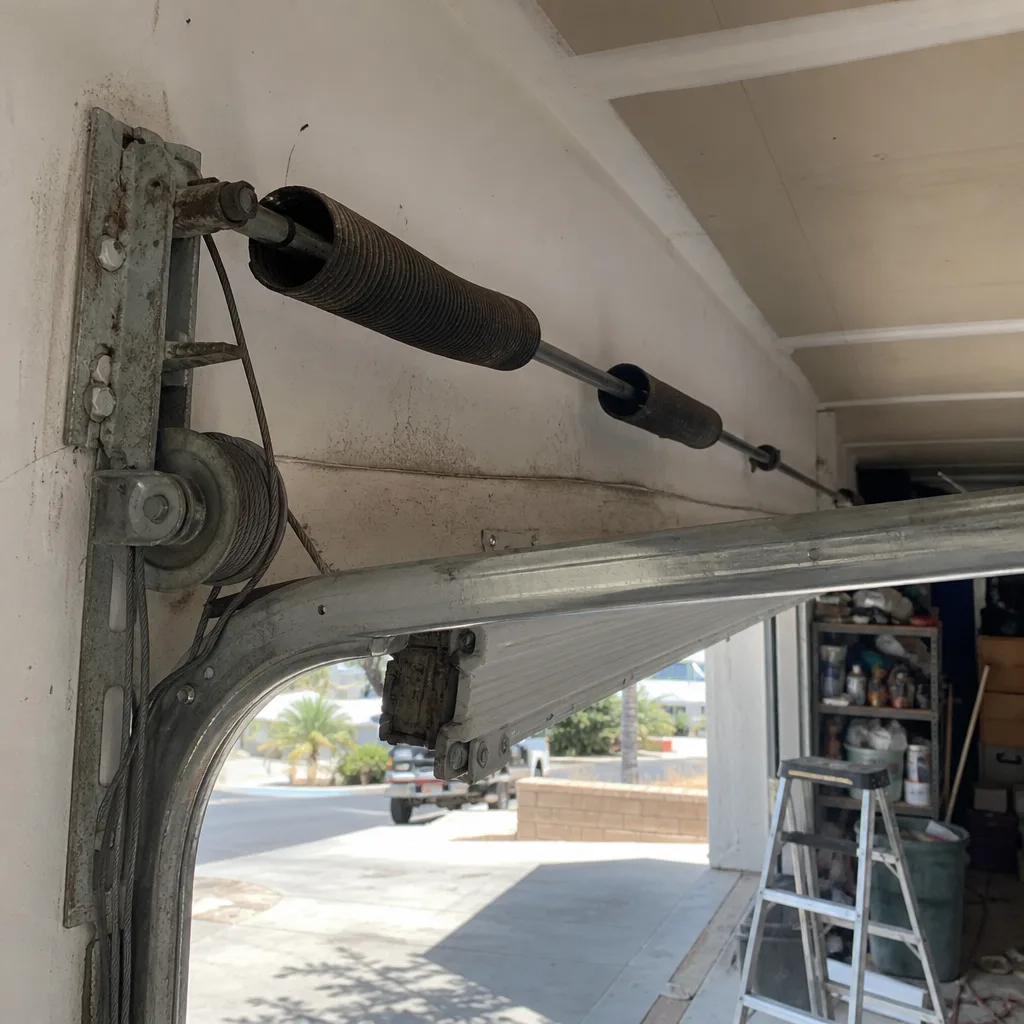
- Look at the spring mounted above the closed door, centered on the wall. If you see a visible gap in the coil, the spring has snapped.
- Test the door manually by pulling the red emergency release cord. If the door feels extremely heavy and won’t lift past knee height, the spring has lost its tension.
- Listen for a loud bang from the garage that sounded like a car backfiring. That’s the spring breaking, often followed by the door slamming shut if a cable also slipped.
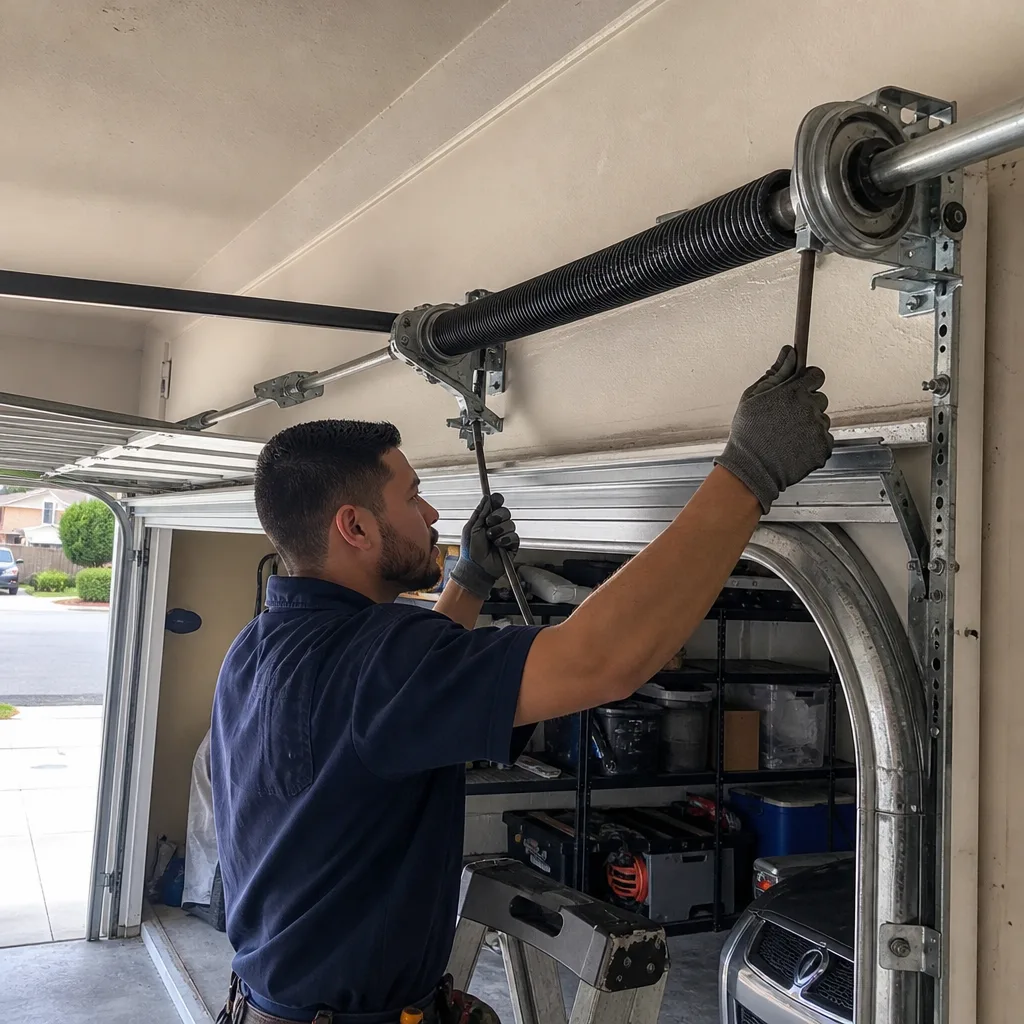
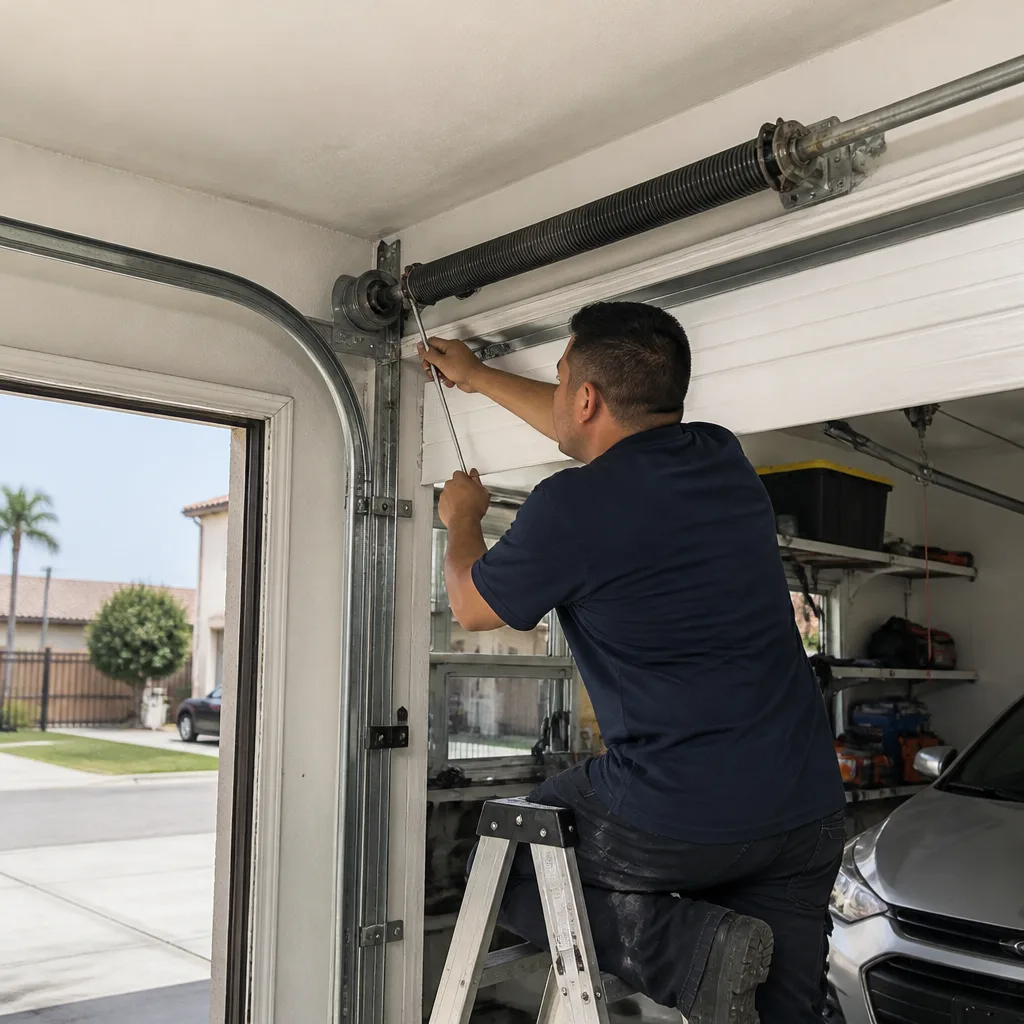
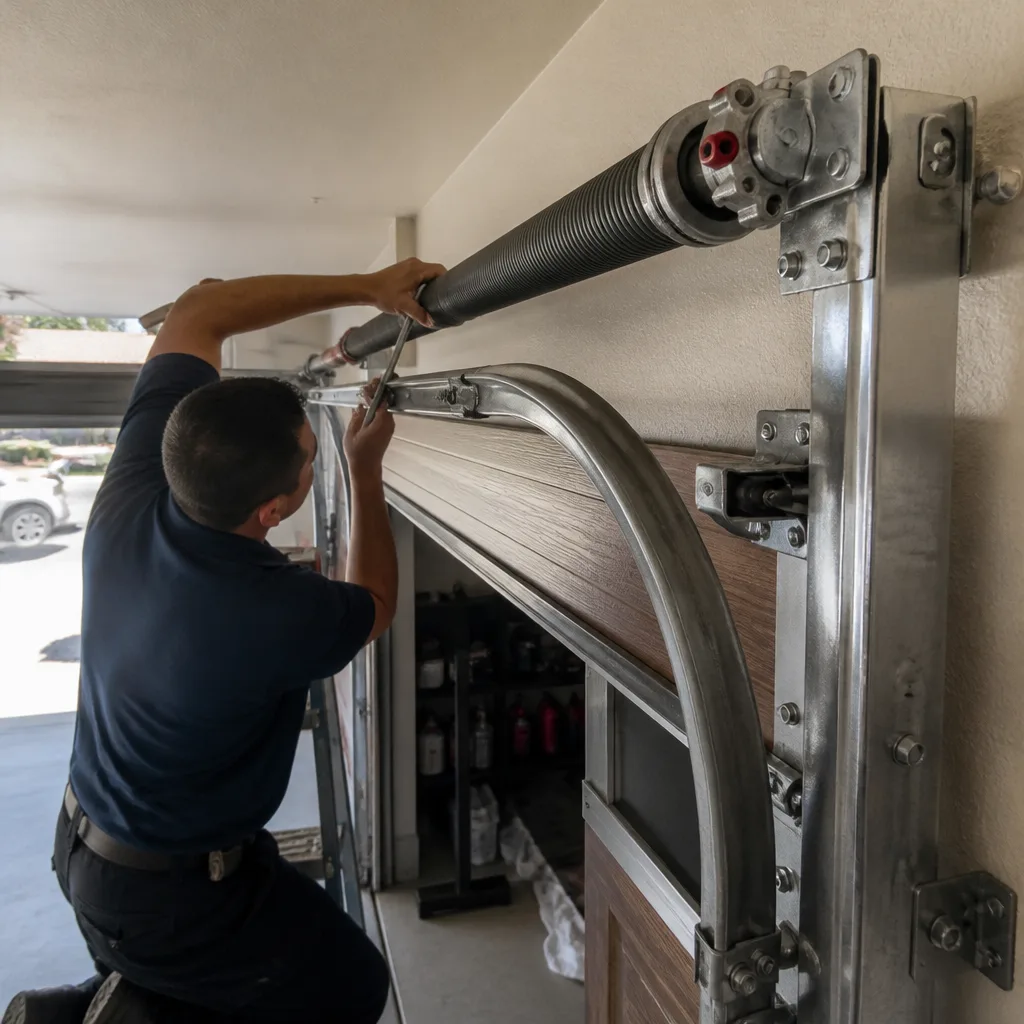
Spring replacement is not a DIY job. The winding and unwinding of torsion springs stores enough kinetic energy to remove fingers or fracture facial bones if a winding bar slips. We don’t give step-by-step instructions for spring work because the risk isn’t worth the money saved. What we do tell homeowners is what the repair should include: replacing both springs (not just the broken one, since the unbroken spring has the same cycle count and will fail soon), checking the cable drums, and rebalancing the door so the opener isn’t pulling against dead weight.
In Jurupa Valley specifically, we recommend upgrading to a higher-cycle spring when the original fails. The standard spring on a builder-grade door is rated for 10,000 cycles, which translates to roughly 7-9 years of normal use. A high-cycle spring rated for 25,000 cycles costs more upfront but has consistently outlasted two standard spring replacements in our local experience. For a home you plan to stay in, the math favors the upgrade.
Cable and Roller Wear: What Desert Dust Does to Moving Parts
The second most common repair category in Jurupa Valley involves the door’s cable and roller system. Desert dust is a fine abrasive that works its way into every moving joint on a garage door system. Combine that with the dry air, which evaporates lubricants faster than coastal cities experience, and you get rollers that grind, cables that fray, and hinges that bind.
Cable problems to watch for:
- Frayed strands visible near the bottom bracket where the cable attaches to the door
- A door that sits slightly crooked when closed, indicating one cable has stretched or slipped
- A cable that has come completely off the drum, leaving the door hanging unevenly
Roller problems to watch for:
- Squealing or grinding during operation that lubrication doesn’t fix
- Visible flat spots on the roller wheel itself
- A door that jerks or shakes as it moves through the track
Cable re-threading under tension is dangerous and should be left to a trained professional. Roller replacement, by contrast, is one of the few repairs a mechanically inclined homeowner can tackle safely if the bottom rollers are the only ones being replaced, since those brackets attach with simple bolts. We don’t recommend touching the bottom bracket on a door with a live torsion spring, though. The cable is under tension from the spring, and one wrong move releases that energy.
For Jurupa Valley homes with exposed tracks, an aggressive monthly dust removal routine extends roller life significantly. A shop vacuum with a narrow nozzle attachment run along both vertical tracks removes the abrasive film before it works into the bearing seals. We’ve seen properly maintained nylon rollers in this climate last 12 years while neglected ones fail in 4.
Opener Failures: Heat, Logic Boards, and When Repair Beats Replacement
Garage door opener logic boards fail in Jurupa Valley at a rate we’d call noticeably higher than coastal California norms. The reason is straightforward: the opener unit mounts to the garage ceiling, where the hottest air in the structure collects. A garage that reads 110°F at floor level can be 125°F at the ceiling, and that’s where the opener’s circuit board lives for 15 hours a day during summer.
Signs of a heat-stressed opener include intermittent non-response from wall buttons and remotes, uncommanded door reversals mid-travel, and error code patterns that don’t match the troubleshooting chart in the manual. When we open the unit cover and find discolored capacitors or a board with visible scorching, the diagnosis is confirmed.
This is where brand-agnostic expertise matters. A LiftMaster opener with a failed logic board is often repairable with a replacement board that costs well under half the price of a new unit. A Craftsman opener with the same symptoms may have an obsolete board that’s no longer manufactured, making replacement the only practical option. A door-only contractor who doesn’t work on openers will simply tell you to replace the whole unit. Briarwood Garage Door Repair services garage door opener repair in Jurupa Valley with the goal of repairing first whenever parts remain available, because we know which models still have board stock and which don’t.
The repair-first approach isn’t just cheaper. It’s also faster. A board swap takes under an hour, while a full opener replacement involves removing the old unit, re-hanging the new one, re-programming remotes, and potentially re-running safety sensor wires. If your opener is less than 8 years old and the motor still runs quietly, a repair is usually the right call. If the unit is over 12 years old and the brand is discontinued, replacement becomes the smarter financial decision.
Repair or Replace: A Decision Matrix for Jurupa Valley Homes
The repair-or-replace decision should be based on three factors: the age of the door, the extent of panel damage, and the compatibility of your current opener with what’s available today. Here’s the matrix we apply when we walk a Jurupa Valley homeowner through their options.
| Factor | Repair Makes Sense When | Replace Makes Sense When |
|---|---|---|
| Door age | Under 15 years old with no structural panel damage | Over 18 years old with multiple failed components |
| Panel damage | One panel dented or cracked, no adjacent panel stress | Two or more panels damaged, or frame rails visibly bent |
| Opener compatibility | Current opener is compatible with modern safety sensors | Opener predates 1993 safety standards or lacks compatible parts |
| Spring condition | Single spring failure on an otherwise healthy door | Both springs failed previously AND door shows track wear |
| Home sale timeline | Planning to stay 5+ years | Selling within 18 months and door is visibly aged |
One Jurupa Valley-specific consideration is the sun exposure on west-facing garage doors. A door that faces the afternoon sun on a street like those near Agate Park bakes daily, which breaks down the paint layer and allows oxidation into the steel panels. These doors often look worse than they are mechanically, so we assess the structure before recommending replacement based purely on appearance.
When replacement is the right call, garage door installation in Jurupa Valley has changed significantly in the last decade. Modern doors come with insulated cores that genuinely lower garage temperature by 8-12°F on a summer afternoon, which reduces the heat stress on every component in the system, including the opener above. That insulation upgrade alone can change your repair frequency profile.
What’s Actually DIY-Safe vs. What Needs a Pro
We believe in honest guidance about what a homeowner can handle safely. The line isn’t arbitrary. It’s drawn at the point where stored mechanical energy or tensioned cable becomes part of the equation.
Safe for most homeowners:
- Track and roller lubrication: Apply a garage door-specific lubricant (not WD-40) to rollers, hinges, and tracks twice a year. This is simple, safe, and prevents the most common noise complaints.
- Photo eye sensor alignment: The sensors at the bottom of each track can be knocked out of alignment by a bicycle, a trash can, or a child. Gently adjust them until the indicator lights are steady, then test the door.
- Bottom seal replacement: The rubber strip along the bottom edge slides out of its retainer and a new one slides in. This stops dust ingress in Jurupa Valley garages and takes under 20 minutes.
Never DIY under any circumstances:
- Torsion spring replacement or adjustment: The winding cone holds 50+ pounds of torque. A slip can cause severe injury. This is a hard line.
- Cable replacement or re-threading: Cables carry the lifting load from the spring. Remove one incorrectly and the spring’s tension releases violently.
- Track replacement or re-hanging: The door hangs from these tracks. If the mounting brackets pull from the wall, the entire door weight shifts unexpectedly.
- Opener motor disassembly: Capacitors inside the opener hold a charge even when unplugged. Replace the unit or call a pro.
Garage doors are among the heaviest moving objects in a home. A standard 16-foot double door weighs between 250 and 400 pounds. When the spring system is working, the opener lifts about 15 pounds of that. When the spring fails, the full weight becomes a hazard to anyone who tries to lift the door manually. Treat every repair you’re unsure about with caution, and call the team at Briarwood Garage Door Repair for a straight answer on what’s safe and what isn’t.
How to Read a Garage Door Repair Quote Line by Line
Every repair quote we write for Jurupa Valley homeowners uses the same structure: the diagnosis, the specific parts required, the labor time, and the total. Here’s how to read a quote from any company and spot red flags before you sign.
- Diagnosis clarity: The quote should name the failed component precisely. “Spring replacement” is vague. “Replace both torsion springs with 218 x 2 x 24.5 high-cycle springs, red winding cones included” is specific. Vague quotes hide inflated prices.
- Labor time realism: A spring replacement takes 45-90 minutes for a competent professional. A cable re-threading takes similar time. If labor is quoted at 4+ hours for a single-component repair, ask why.
- Part markup transparency: Most companies mark up parts 15-30% as a sourcing and warranty handling fee. Markups beyond 60% are a signal to get a second opinion.
- Service call fee handling: Some companies charge a separate diagnostic fee that’s waived if you approve the repair. Others roll it into the quote. Make sure you understand which model applies before the technician arrives.
- Warranty language: The quote should state what’s covered and for how long. Spring warranties vary from 1 year to lifetime depending on the spring cycle rating. A quote with no warranty language is a red flag.
One question we recommend every homeowner ask: “Is the price quoted now the price I’ll pay when the work is done?” At Briarwood Garage Door Repair, the price is quoted and agreed before any work starts. If the technician discovers a secondary issue during the repair, we stop, explain what changed, and get your approval before adding anything to the invoice.
Another useful question for Jurupa Valley homeowners specifically: “Do you carry this part on the truck?” Most spring sizes, cable sets, and roller packs for common door brands are standard stock for a garage door specialist. If a company says they need to order a common part and schedule a return visit for a simple spring replacement, they may be a general handyman rather than a door-focused shop.
Brand-Specific Quirks in Jurupa Valley Tract Homes
Jurupa Valley’s housing stock skews tract-heavy, which means certain door brands appear more frequently than others. The three most common in the area are Clopay, Wayne Dalton, and CHI, and each has quirks that affect repair time and part availability.
Wayne Dalton doors, particularly the 9000 series, use a unique torquemaster spring system housed inside a tube rather than mounted externally on the wall. Many general contractors don’t recognize this system and quote for the wrong spring type. The springs themselves are also proprietary, meaning supply chain disruptions affect them more than standard torsion springs. When a Wayne Dalton torquemaster fails, we typically recommend converting to a standard torsion system, which is more maintainable long-term.
Clopay doors from the 2000s and 2010s use a standard torsion system but often came with plastic bearing plates at the ends of the spring tube. After 15 years in a hot Jurupa Valley garage, those plates crack and the spring mounts lose alignment. Replacing the plates is a standard repair, but a tech who’s never seen the failure might misdiagnose it as a track problem.
Craftsman openers (which are manufactured by Chamberlain and share parts with LiftMaster and Chamberlain openers) from the 1990s and early 2000s still operate in many older Jurupa Valley homes. Their motors are durable, but the gear-and-sprocket assembly wears out predictably. The repair is inexpensive and takes under an hour. The challenge is that Craftsman exited the garage door opener market, so many technicians recommend replacing the whole unit when the gear fails. We don’t. The gear kit is still manufactured, and a repair keeps these units running for years.
Whatever brand is on your door, we know it. That brand-agnostic position means a brick specialist from Raynor gets diagnosed by the same team that handles a torsion spring on a builder-grade Clopay. There’s no brand we’re incentivized to sell, so the diagnosis is based on what’s actually wrong with your system.
Common Mistakes to Avoid
- Skipping regular lubrication: Jurupa Valley’s dry heat evaporates lubricant fast. A door with no lubrication on rollers and hinges wears out bearings three times faster. Twice-yearly lubrication costs $15 and extends roller life significantly.
- Replacing only one spring: The unbroken spring has the same cycle count as the one that snapped. Replacing just the broken spring saves $60-100 upfront and costs double that when the second fails months later.
- Using WD-40 on garage door parts: WD-40 is a cleaner, not a lubricant. It strips existing grease and leaves parts running dry. Use garage door-specific lubricant or white lithium grease.
- Ignoring a noisy door: Grinding, squealing, or rattling is never normal. Every noise a door makes corresponds to a mechanical issue that’s cheaper to fix early. In Jurupa Valley’s dusty environment, a grinding roller that goes unaddressed for a season can destroy the track it rides in.
- Letting a handyman touch the spring system: Garage door springs are one of the few home components where the phrase “it’s just a spring” gets people hurt. A handyman without door-specific training and insurance is a liability waiting to happen.
- Choosing a new door based on price alone: Jurupa Valley’s heat exposure means insulation value and paint durability matter as much as initial cost. A cheap uninsulated door transfers heat into the garage and shortens the life of everything inside, including your car’s battery.
When to Call a Professional
Call a garage door professional when you hear a loud snap from the garage, when the door sits visibly uneven or won’t move, when cables appear frayed or loose, or when an opener stops responding consistently. These symptoms indicate either a broken spring or a tensioned cable problem, both of which carry serious injury risk if handled incorrectly. Other signs that warrant a call include a door that reverses mid-travel, a door that closes too fast, or visible rust on spring coils, which indicates the spring is nearing end of life. Briarwood Garage Door Repair offers free estimates in Jurupa Valley, and our approach is simple: we diagnose the actual problem, explain what’s needed in plain language, and give you a price before any work begins. Call (866) 569-5176 and tell us what you’re seeing. We’ll tell you what it is and what it will cost.
See the difference
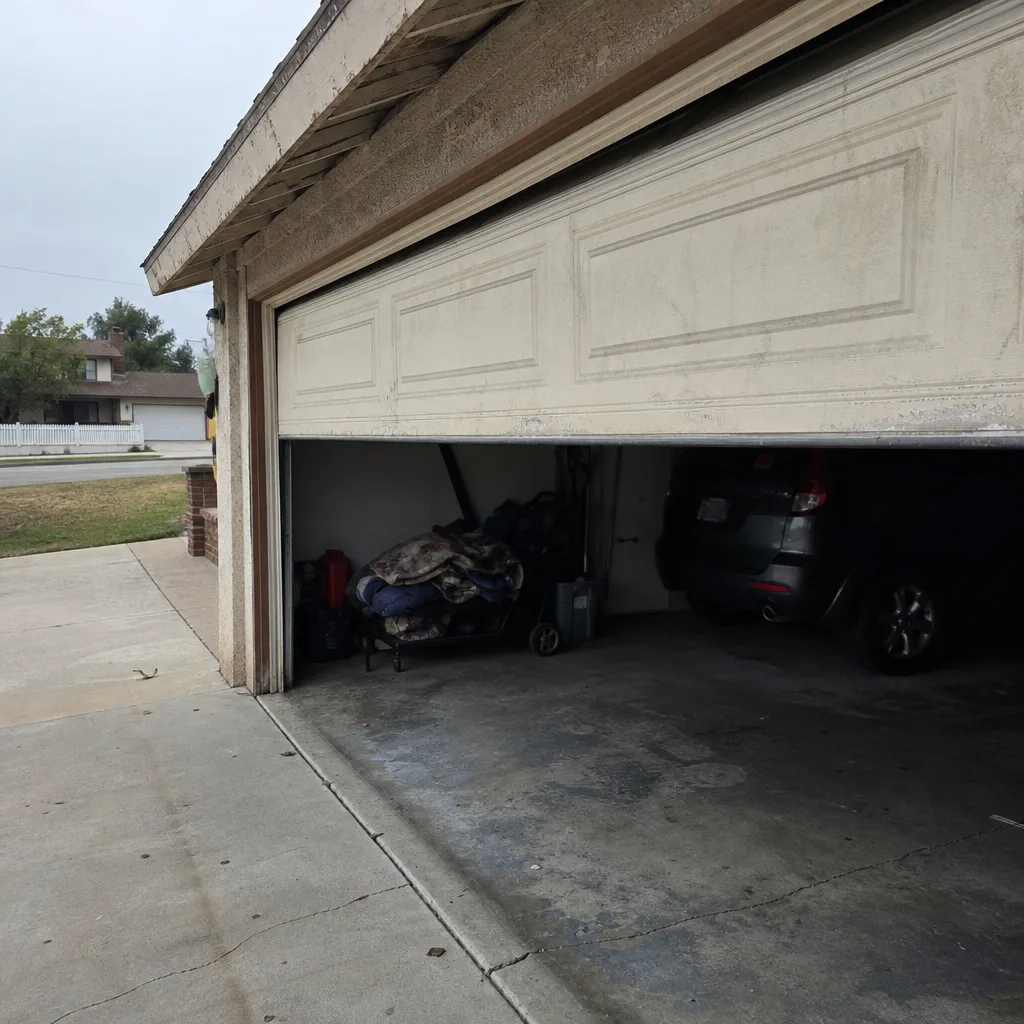 Before
 After
 Before
 After
 Before
 After
Frequently Asked Questions
Most garage door repairs in Jurupa Valley fall between $125 and $450, with spring replacement being the most common at $180-$340 for a standard two-spring system. Opener logic board repair runs $150-$275 when a replacement board is available, and full opener replacement ranges from $350-$700 depending on the unit’s horsepower and features. These are averages based on the most common repair types we see across Jurupa Valley homes. Call (866) 569-5176 for a free estimate on your specific issue.
Single-component repairs like spring replacement, cable re-threading, and roller swaps are typically completed the same day when scheduled during normal business hours. Emergency repair calls are handled as quickly as our schedule allows, and we carry the most common spring sizes, cable sets, and roller packs for Jurupa Valley’s dominant door brands on our trucks. Call (866) 569-5176 to see what today’s schedule allows.
A broken torsion spring is visible as a gap in the coil, often with a loud bang when it snaps. The door will feel extremely heavy when you try to lift it manually. If you see a gap or the door won’t lift past a few inches, do not continue trying to open it. The spring’s stored energy and the door’s full weight now rest on the remaining components, which can fail catastrophically.
We repair openers from LiftMaster, Chamberlain, Genie, Clopay, Amarr, Wayne Dalton, Craftsman, and Raynor. Our team services all eight major brands, so the diagnosis is based on what’s actually wrong with your specific unit, not on steering you toward a brand we sell. If your opener’s parts are still manufactured, we repair rather than replace.
Jurupa Valley’s sustained summer heat causes metal springs to expand and contract through extreme daily cycles, which accelerates metal fatigue and shortens the spring’s working life. Opener logic boards also fail more often in summer because the ceiling-mounted unit sits in the hottest air in the garage. This seasonal pattern is common across the Inland Empire, but it’s more pronounced in Jurupa Valley due to the combination of extreme highs and low humidity.
If your door is under 15 years old, has no structural panel damage, and your opener is still supported by parts manufacturers, repair is typically the better financial choice. The calculation shifts when the door is older than 18 years, when two or more panels are damaged, or when the opener is discontinued and parts are no longer available. We walk through the math with you before recommending anything, because repair first, replacement only when it’s the right call, is how we operate.
The Bottom Line
Garage door problems in Jurupa Valley follow predictable patterns tied to heat, dust, and the area’s tract-home construction. Knowing which failure mode you’re dealing with, whether it’s spring fatigue, desert dust wear on cables and rollers, or heat-related opener failure, is the fastest path to the right repair. Some tasks are safe for a motivated homeowner, but anything involving torsion springs or tensioned cables demands a trained professional. The right repair at the right time extends the life of every component in your system, and it costs less than replacement in the majority of cases. For a free estimate on any symptom you’re seeing, contact Briarwood Garage Door Repair home by calling (866) 569-5176. Garage doors are all we do, so we do them right.
Written by the team at Briarwood Garage Door Repair, serving Jurupa Valley since 2018. Explore more guides & resources from our team.